

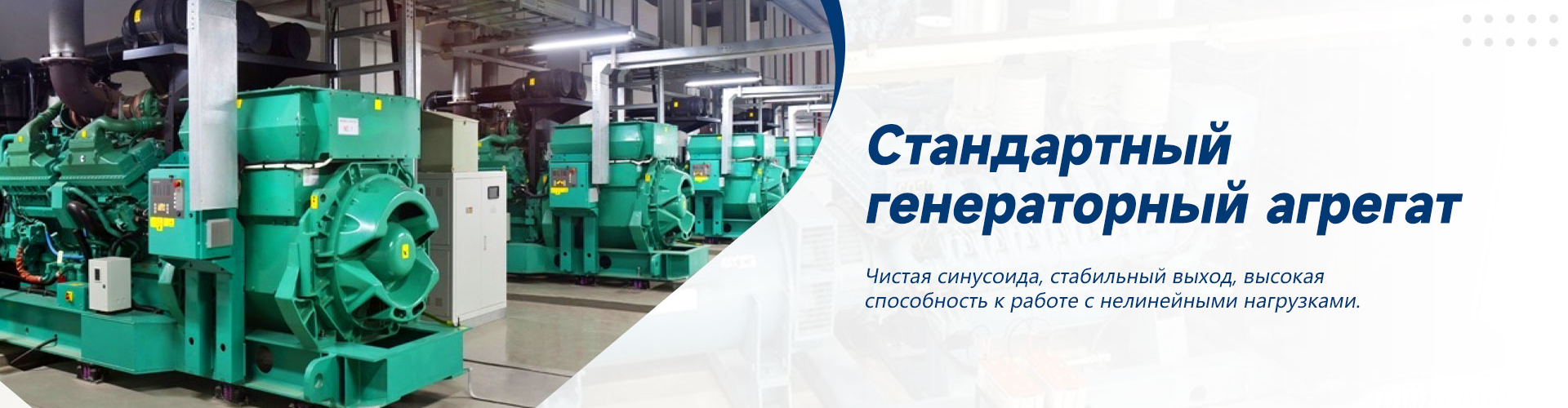
Is China the main buyer of powerful generators?
2026-01-06
- From import to localization: how the landscape has changed
- Where imports still hold out: niche segments and special cases
- Case study: why ?just sell to China? doesn't work
- The role of Chinese companies as global integrators
- Looking to the future: hydrogen, hybrids and new challenges
- Bottom line: the main buyer of what exactly?
I often hear this question, and it always makes me smile a little. From the outside it seems logical: a huge country, rapid growth, large-scale projects - of course, they buy everything. But reality, as usual, is more complex and interesting. Yes, China is a colossal market, but talking about it as a single “main buyer”? - means not seeing the whole picture. It is important to understand what is happening inside China itself and how this is changing the global landscape. I have been in this field for more than ten years, and during this time the focus has shifted from simple import to something else.
From import to localization: how the landscape has changed
Ten years ago the picture was different. Large infrastructure projects, especially in remote regions or during peak construction periods, were indeed actively purchased by foreignpowerful generators. Brands like Caterpillar, Cummins, MTU were in great demand. This was a guarantee of quality and reliability for critical facilities. But even then, its own industry developed in parallel.
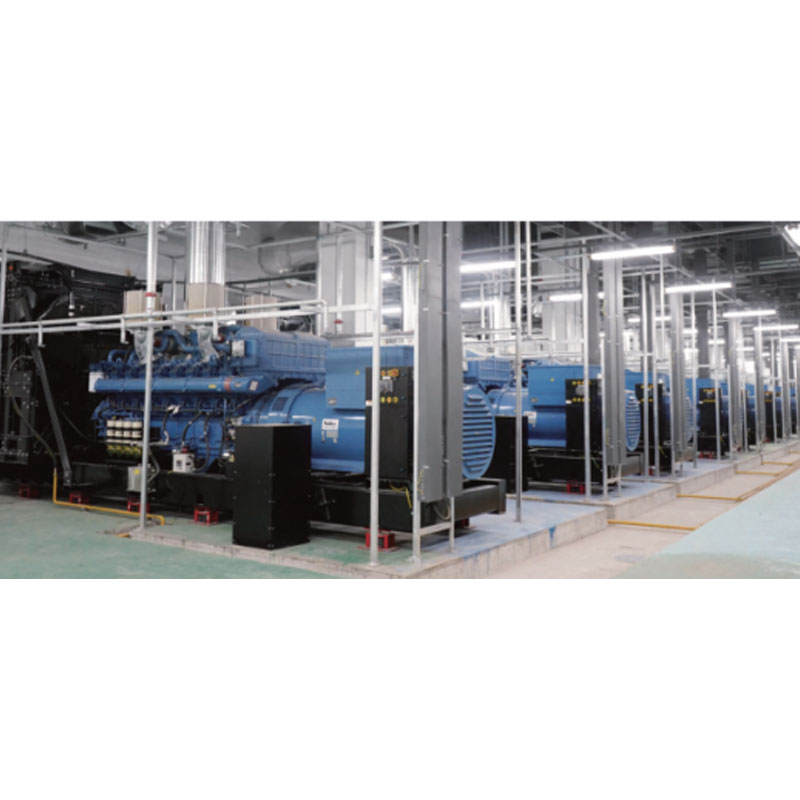
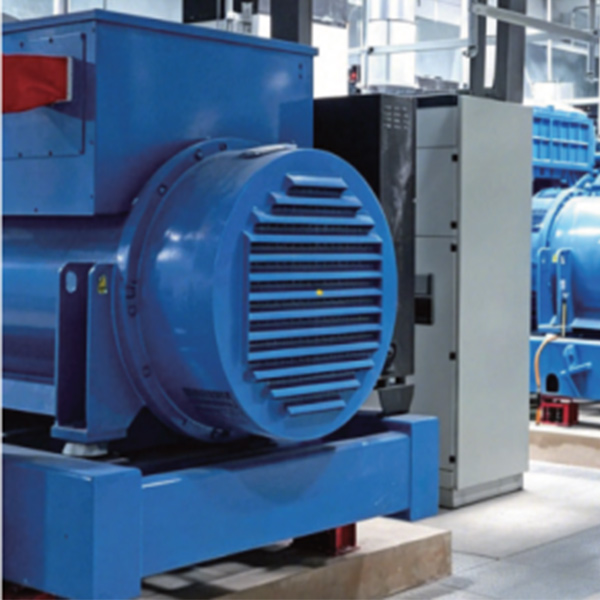
Now the Chinese generator market is primarily a story of domestic production. Companies like Weichai, Yuchai, Shangchai have made giant leaps. They don't just copy, they adapt, improve and often offer solutions that are perfectly tailored to local requirements and price expectations. Therefore, when we talk about “purchase”, we need to immediately clarify: are we talking about domestic purchases between Chinese companies or imports? The share of the latter for standard high-power installations (say, up to 2-3 MW) is steadily decreasing.
But there is a nuance that many people miss. China became the main buyer not so much of finished machines, but of technologies, licenses and critical components in the previous stage. The production of modern high-power diesel generator sets is a complex cooperation. And if the power units are often our own, then fuel systems, deep-level control systems, some types of compressors or turbines can still come from abroad. So the money goes, but to another part of the chain.
Where imports still hold out: niche segments and special cases
Importedgenerator setshave not disappeared. They simply retreated to segments where their advantages are critical and competition with local manufacturers is less direct. The first is ultra-high requirements for reliability. For example, oil and gas industry facilities with strict international standards (API, ISO), Tier IV data centers or pharmaceutical facilities. There, the customer is ready to pay a premium for a brand proven over decades and a global service network.
The second is special applications. Gas piston units (GPU) using specific fuels, high efficiency cogeneration complexes, offshore units with special certification (type DNV GL). Here, Chinese manufacturers are still gaining experience, and Western or Japanese companies still maintain strong positions. I myself participated in a tender for the supply of gas turbine units for the utilization of associated gas - there was competition between European giants, the Chinese option was not even seriously considered due to the requirements for adaptation and efficiency.
The third area is projects financed by international organizations or built by foreign contractors. They often require equipment from their approved supplier registries. This automatically includes well-known world brands in the tender. But even here, Chinese contractors are increasingly lobbying to use compatible local equipment to reduce costs and simplify logistics.
Case study: why ?just sell to China? doesn't work
I would like to give an example from personal experience that well illustrates the paradigm shift. Several years ago, we worked on a project to supply powerful diesel generators (about 1.5 MW) for backup power supply to a mining complex. The client was Chinese, but the facility was located in Central Asia. Initially, they requested European equipment, and the budget was appropriate.
In the process of negotiations and clarification of the technical specifications, two key things became clear. Firstly, the availability of service support not in Europe, but in the region, preferably with Russian- or Chinese-speaking engineers, was critically important. Secondly, the delivery times announced by the European plant (6-8 months) were categorically not satisfactory to them. The project could stop.
Then we proposed an alternative - assembly at the facilities of a partner plant in China, but using an original European-made engine and generator (the same hybrid approach). Assembly, testing and adaptation to local conditions (dust, temperature changes) were carried out, for example, by companies such asYuke (Shandong) Electrical Technology Co.,Ltd. Looked at their websitevoyoko.ru- yes, they position themselves as an innovative enterprise that combines R&D, technical consulting and equipment supply. This is exactly the type of player that fills this niche. As a result, we received a high-quality product that met the key requirements for “filling”, but with a deadline of 3 months and a full package of localized documentation and services. The client was happy. We did not sell a ready-made imported unit, but a comprehensive solution and technological integration.
The role of Chinese companies as global integrators
This is perhaps the most important trend. Chinese electrical companies are no longer just producers or buyers. They have become powerful system integrators. Let's take the large-scale projects “Belt and Road”? in Asia and Africa. The Chinese side often acts as a general contractor, financing organization and technology supplier all rolled into one.
In such projectspower equipment- only part of the complex. And the decision about what exactly it will be is made based on the overall economics of the project, lending conditions and politics. Often the specifications include the statement "or equivalent as approved by the engineer." And this is where Chinese engineers naturally lean toward proven local suppliers who can respond quickly and adapt flexibly.
Companies like the aforementioned Yuke Electric (as stated in their description, a company that combines development, consulting and construction) fit perfectly into this model. They can take licensed technology or key components as a basis, modify them for a specific project in their country, and then supply and install them at a facility abroad. Thus, China no longer exports raw materials or cheap consumer goods, but packaged engineering and technical solutions. And in these solutions, powerful generators are an important, but not always imported, element.
Looking to the future: hydrogen, hybrids and new challenges
The conversation about the future of the market is already revolving around other topics. China's interest as a "buyer" is now shifting towards breakthrough technologies, where he does not yet feel like an absolute leader. Hydrogen engine-generators, energy storage systems based on new types of batteries, intelligent microgrid control systems - this is where the real hunt for knowledge and ready-made solutions is going on.
Chinese research institutes and companies are actively entering into alliances, buying out startups and licenses in these areas. They are ready to be the main buyers of such technologies at the implementation stage, in order to then quickly scale their production at home. I saw several prototypes of hybrid power plants for remote villages - solar panels, wind generators, diesel and a control system. ?Brain? the systems were from Germany, the power electronics were partly from China, partly from Japan, assembly and adaptation were again in China.
Another challenge is the environment. Strict domestic emissions standards for diesel generators are forcing the search for new solutions. And here again there is a demand for foreign filter systems, catalysts and exhaust neutralization technologies. This is again the case when the purchase is not of the entire unit, but of its key, most technologically advanced part.
Bottom line: the main buyer of what exactly?
So is China the main buyer of high-power generators? The answer is ambiguous. If we talk about ready-to-use imported standard-class installations, no, its role is no longer dominant. The market has matured and become saturated with its own production.
But if you look more broadly, China, of course, remains the main buyer and consumer of several key things: 1) High technologies and know-how in the field of energy generation. 2) Critical components for in-house production. 3) Complex engineering solutions in which generators are built as a module. 4) Market shares in partner countries through large-scale infrastructure projects.
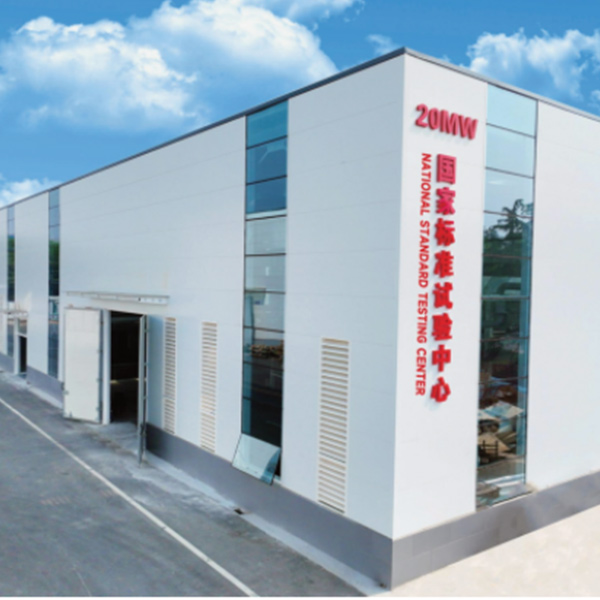
So the question in the title is a little outdated. It would be more accurate to ask: “China is the main driver and integrator of the market for high-power generator systems?” And here the answer will be much closer to the affirmative. Its influence is determined not by the volume of purchases on an invoice, but by the ability to redefine value chains and set new rules of the game on the global field. And in this new game players likeYuke (Shandong) Electrical Technology Co.,Ltd, are not just suppliers, but important nodes connecting technology, production and the final project. This is the modern reality that you see when you work in these supply chains for years.
-


-
-


WeChat

-
WeChat