

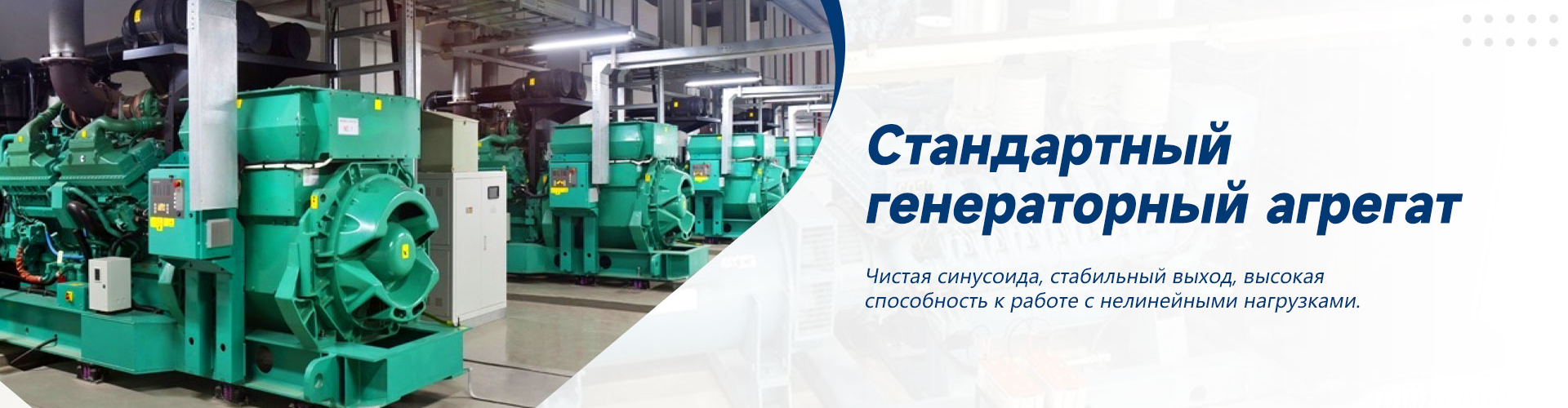
China diesel generators: where are exports growing?
2026-01-06
Many people still think that Chinese diesel generators are only about the price. Yes, competitive cost is a factor, but if it all came down to just that, we would not have seen the growth in supplies to those regions where price has long been not the main argument. In fact, the export vector is shifting to where not just “hardware” is required, but a comprehensive solution for a specific, often complex, task. And this is where the fun begins.
From ?boxes? to solutions: how demand has changed
Previously, the scheme was simple: request for a 100 kW generator, compare specifications, choose based on price per kilowatt. Now, especially when working with industrial clients or contractors on large sites, the request sounds different. We need a power supply system for a remote telecommunications tower with remote monitoring capabilities and integration with solar panels. Or a hybrid solution for a hotel complex, where the generator must work in cascade with the grid and energy storage system, while complying with strict noise standards.
This shift is key. Chinese manufacturers, who previously focused on assembly, are now actively developing engineering departments. Let's take for exampleYuke (Shandong) Electrical Technology Co.,Ltd(Yuke Electric). Their websitevoyoko.ru- this is no longer just a catalog of units. It can be seen that they position themselves as a partner offering technical consulting and engineering. Their background, coming from DEVER Electric since 2003, allows us to talk not only about the product, but also about the technology platform. The clients I worked with from the CIS and Eastern Europe began to appreciate this. They need not just delivery, but responsibility for the performance of the entire system.
I remember one project in Kazakhstan related to water treatment facilities. The request was for “reliable generators?”. But during a detailed discussion, it turned out that the issue of automatic transfer of a reserve (ATS) with a delay, synchronization with a local weak network and protection from frequent power surges was critically important. Standard ?box? It didn't fit here from the factory. Together with the supplier’s engineers, we had to essentially design the control cabinet and monitoring system almost from scratch. This was the same transition from selling equipment to selling solutions. And such cases now determine exports in the above-average segment.
Geography of growth: not only Africa and Southeast Asia
Traditionally, strong markets were Africa, Southeast Asia, and the Middle East. The demand there is huge, but it is very different. In Africa, simple, repairable and “indestructible” products are still in demand. models, often in open design. But even there, the trend towards mobile power plants for mining companies or generating plants for mini-grids is setting new standards.
However, the more significant growth is in Europe, especially Eastern and Central Europe. Yes, there are high barriers to entry: CE certification, Stage V emissions directive, noise requirements. But those Chinese manufacturers who have gone this route gain access to a market with high margins. Their products are no longer perceived as a “budget alternative”, but as a conscious choice for construction sites, infrastructure facilities, and backup power supply for commercial buildings. Success here is based not on price, but on full compliance with regulations and readiness to provide all technical documentation on site.
It is worth mentioning separately about the CIS countries. This is perhaps the most natural and fastest growing market for quality Chinesediesel generators. Reasons: geographical and logistical proximity, similar climatic conditions (harsh winters), clear regulatory framework and growing ambitions in the field of infrastructure projects. Both classic products and complex diesel generator sets in a noise-absorbing casing for urban development are in demand here.
Calls that are not visible in statistics
Export growth is not just about container numbers. This is daily work with problems that are not written about in brochures. One of the main ones is logistics and the “last mile”. Sending the generator to the port is half the battle. But its customs clearance, delivery by heavy transport to a remote construction site, unloading and placement on the foundation is often a headache for the importer. Successful suppliers now actively help partners with these issues by offering logistics consulting or working with trusted carriers in the destination country.
Another challenge is service and spare parts. You can sell a generator once, but maintaining its operation is a story for decades. The presence of service centers or established supply channels for original spare parts has become a key competitive advantage. Customers have become smarter: they ask not only about the warranty, but also about the availability of a spare parts warehouse in the region, training of local mechanics. Companies likeYuke Electric, which declare a full cycle from R&D to engineering construction and services, are just trying to fill this need. It is important that these are not just words on the site, but a real network of service partners.
And, of course, “digital?”. The demand for remote monitoring and management is growing exponentially. A modern power plant is an IoT device. The ability to see fuel levels, operating parameters, receive fault alerts through a cloud portal or even a mobile application is no longer an option, but a standard expectation for many projects. Chinese manufacturers are even ahead in some aspects here, quickly introducing such systems based on their own or partner developments.
Case: why not all projects end in success
I'll tell you about a failure that taught me a lot. There was a request from a contractor from Siberia for several powerful generators for a rotational camp. The price and main characteristics suited me; the project seemed standard. But we missed one nuance - the requirement for starting at extremely low temperatures (-50°C and below). Standard engine pre-heaters and lubrication systems could not cope with this task.
We proposed a standard solution that worked down to -40°C. In words, the client agreed, but in practice, in the very first winter, problems arose with the launch. We had to urgently modify the system: install more powerful heaters, additional thermal insulation, and equip the units with special low-temperature batteries. The reputational blow and financial losses were significant. Conclusion: technical consulting should be deep and meticulous. It is not enough to ask “what is the minimum temperature?”. It is necessary to find out all the operating conditions: humidity, altitude above sea level, type of load (starting powerful electric motors), frequency of switching on. We now use a detailed, multi-page questionnaire and always recommend an on-site engineering visit if possible.
This experience also showed that it is important to work with manufacturers who have flexibility in configuration. Not all factories are ready to make changes to the standard design for a specific project. And those who are ready win complex, but the most interesting and profitable contracts.
The future: integration and "green" technology
The trend that will determine exports in the next 5 years is hybridization.Diesel generatorless and less considered as the only source of energy. It becomes part of a hybrid system: diesel + solar panels + wind generator + energy storage devices (ESS). Its role is not to work constantly, but to provide stability and cover peaks when renewable sources fail. China, as a world leader in solar panels and storage systems, has a huge advantage here. Turnkey solutions are emerging, where one supplier is responsible for the entire hybrid energy system.
The second direction is hydrogen and synthetic fuels. So far these are more experiments and pilot projects, but some leading manufacturers have already announced generators capable of running on a mixture of diesel and hydrogen. This is a response to tightening environmental regulations in developed countries. Exports will grow in the future to places where Chinese companies can offer not just an engine, but environmentally friendly energy technology.
And finally, service as a service (Service-as-a-Service). A model where the client pays not for a kilowatt of hardware power, but for the guaranteed availability of electricity. In this model, the supplier is solely responsible for maintenance, repairs, monitoring and even fuel. This is the highest form of transition from selling a product to selling a result. This requires a global service network and digital platforms. They are moving towards this, and those who come first will capture customer loyalty for many years to come.
So, answering the question “where is export growing?”: it is growing towards complexity, responsibility and depth of integration. The market is no longer divided into ?expensive brands? and “cheap China?”. It is divided into equipment suppliers and reliable energy solutions providers. And in the second category, Chinese companies that have invested in innovation and service now have very serious positions and, apparently, a great future.
-


-
-


WeChat

-
WeChat