

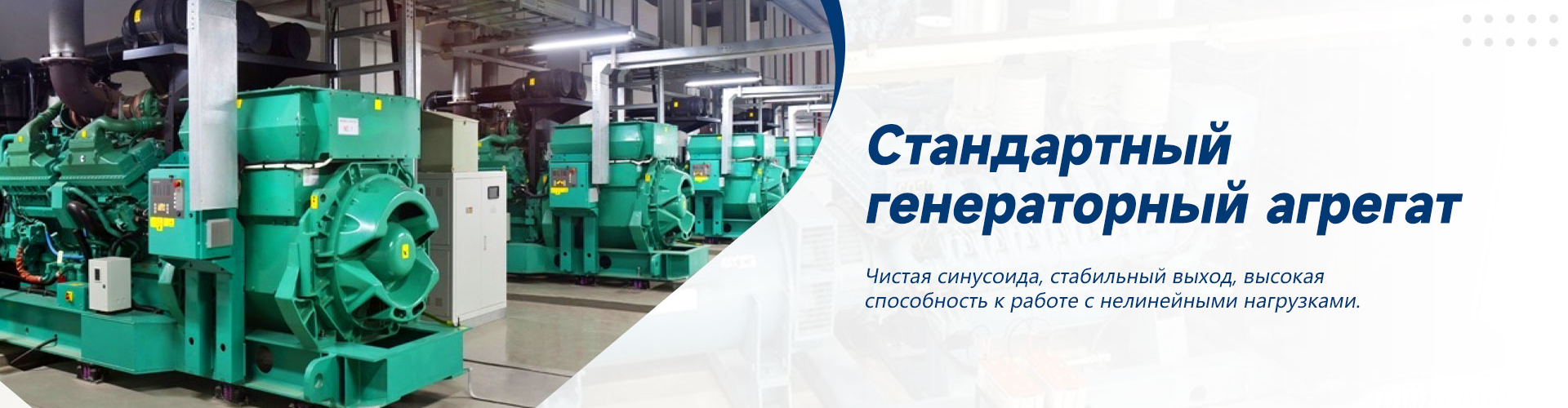
Is China the main buyer of power plants?
2026-01-29
I often hear this question at industry meetings. The wording is, frankly, too general and a little misleading. I would like to clarify right away: what kind of power plants? Gas turbine, steam, diesel, solar parks or maybe small hydroelectric power plants? And the ?chief? — by what parameters: by the number of units, total capacity or volume of contracts? If we talk about the global market for new turnkey construction, then China is certainly a key player, but rathertechnology and equipment supplier, and not just as a buyer. Although he, of course, buys a lot - but with his own specific tasks.
Where do the legs of a myth come from?
The story with the "main buyer" lasts for ten years, if not more. It all started with a period of rapid growth in energy consumption in China, when they actually bought everything from Siemens and GE gas turbines to Japanese-made steam boilers. It was a period of technology accumulation. Many then, including some of my colleagues from Europe, thought that it would always be this way - China was an eternal market for high-tech generating equipment.
But they miscalculated. The Chinese quickly moved from procurement to joint production, and then to full localization and in-house development. Now, when we see a large tender somewhere in Asia or Africa, the main competitors are often Chinese engineering companies offering solutions based on their equipment. They became system integrators. And here is the paradox: in order to build abroad, they sometimes still need key components from the same Western manufacturers for particularly critical projects. But these are targeted purchases, not mass purchases.
For example, in projects "green" In the energy sector, they can combine their solar panels and inverters with European-made high-voltage equipment to increase the reliability of the entire facility in the eyes of the customer. This is a complex, hybrid procurement scheme, where China acts as both buyer and supplier at the same time.
What China is buying now: a paradigm shift
Today's procurement is not about “buying a power plant,” but about “buying a technology or component that is not available within the country.” The emphasis has shifted. If previously they purchased entire turbines, now they can buy heat-resistant alloys for blades, combustion control systems, or licenses for specific software for modeling thermal processes. This is a higher, point level.
The second big item is equipment for nuclear energy. Here, despite the successes with the Hualong One reactors, cooperation with Rosatom? and other players continues, and this is precisely the procurement of complex engineering solutions and critical components.
And the third is the reverse process, which many people overlook. Chinese companies that have entered the global market often act as contractors. And to fulfill a contract, say, in Latin America, they can centrally purchase equipment in China from their own subcontractors. For world statistics, this looks like an internal Chinese deal, but in fact this “powerhouse” intended for Brazil. So the import/export statistics here are very disingenuous.
Case study: when procurement is only part of the puzzle
I’ll tell you an example that our partners encountered. A Chinese engineering company won a tender to modernize a thermal power plant in Kazakhstan. The technical specifications required the use of gas turbine units of a certain class. It would be logical to expect that they would supply a turbine of their own production, for example, from Harbin Electric or Dongfang.
But no. They chose a European turbine. Why? Because project financing was tied to export credits from a European bank, which had its own requirements for ?origin? key equipment. The Chinese company acted as a smart integrator in this situation: it bought the “core?” in Europe, and everything else - water treatment systems, transformers, switchgear, automation systems - was purchased from Chinese manufacturers, including rather highly specialized companies.
One of these companies isYuke Electrical Technology Co., Ltd. (Shandong). They are not well-known, like giants like SEPCO or POWERCHINA, but it is precisely such companies that form the technological basis of the Chinese power engineering industry. Looked at their websitevoyoko.ru— it is clear that the company has grown from a team founded back in 2003 in Qingdao, and positions itself as an innovative enterprise with a full cycle: from R&D and technical consulting to equipment supply and construction. These are exactly the “quiet” ones. players often supply custom solutions for projects where the Chinese integrator is the general contractor. They are part of the very ecosystem that allows China to be not just a “buyer”, but an architect of energy facilities around the world.
Problems and pitfalls of integration
Of course, not everything is so smooth. This model is ?global integrator + local Chinese suppliers? often fails during operation. I myself have seen projects in Africa where a Chinese company built a facility using, for example, German turbines and Chinese generators, cooling systems and cable lines. Everything works until the warranty expires and the service team leaves.
Local operators then have to deal with a hybrid system, where documentation may be in different languages, and spare parts for different systems must be sourced from different manufacturers on different continents. In such a situation, the Chinese general contractor is not always ready to bear full responsibility for the entire “bouquet”. This is a sore subject, and it makes some customers think twice before choosing such an integrator, despite the attractive price.
Another nuance is logistics and customs. Purchasing equipment from different sources for one project is supply chain administration. The delay of one container with substation equipment from a company like Yuke Electric due to problems at the port can freeze the entire project, which already has a ready-made turbine unit from Ansaldo. Risks are multiplying.
A look into the future: where the market is heading
I think the wording “China is the main buyer?” will become completely obsolete in the next 5-7 years. He turns into the ?chief architect? and "premier end-to-end solution provider?". Its purchases will be increasingly selective: not mass-produced equipment, but unique technologies, know-how, licenses and, possibly, access to resources.
Their activity in the field of “green” is already visible. hydrogen and energy storage. They can purchase membranes for electrolyzers or patents in these areas in order to offer the world a turnkey hydrogen production plant in a couple of years. This is a strategy.
And, of course, a huge domestic market for the modernization and digitalization of existing power plants. This is where the bulk of purchases in physical terms will be. But these purchases will be primarily from our own, within the Chinese ecosystem. To an outside observer, this will look like a decrease in imports, but in essence it is consolidation and debugging of its own technological chain before a new round of global expansion.
So, to answer the question from the title: no, China is no longer the main buyer in the classical sense. He is a leading systems integrator and creator of proprietary, alternative energy value chains. And his purchases are targeted strikes to fill remaining technology gaps, not the basis of his energy strategy. This is a much more complex and interesting picture than it seems at first glance.
-


-
-


WeChat

-
WeChat