

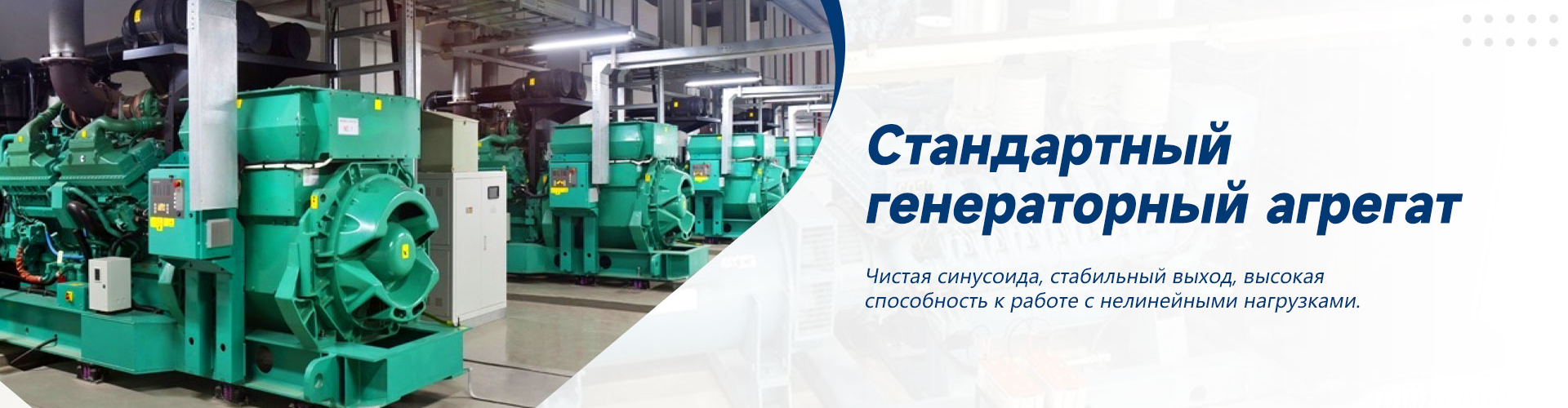
Who is the main buyer of Chinese oil-fired power plants?
2026-01-27
To be honest, when you see this question, the first thing that comes to mind is African countries or maybe some island states. But the reality, as usual, is more complex and a little more cynical. Many people immediately think about the poor regions, which don’t care as long as it burns and provides electricity. It's superficial. The real picture is revealed when you see the same names in invoices and folders with tender documentation for years. The main buyer is not so much a geographical point as a specific type of customer, which is born at the intersection of acute needs, specific resources and... often a complete lack of alternatives.
Client portrait: not a country, but a situation
Let's immediately discard the idea that this is a mass product. Chinesefuel oil power plants- a one-piece, niche product. They are not purchased for the basic power grid of a developing country if there is at least some possibility of building something more modern. The buyer appears where there is at least one of three conditions: an isolated network (an island, a remote village), access to cheap or decommissioned fuel oil (often near refineries or in ports where this fuel is almost waste), and, what is critical, an urgent need for power “here and now?”, when there is no time or money for long-term projects of hydroelectric power plants or gas-fired cogeneration plants.
Therefore, the typical buyer is not the energy ministry of a large government (although they are also on the list, but on special occasions), but rather a private mining company somewhere in Guinea or Zambia that needs to power a new quarry. Or a port operator in Southeast Asia who has access to residual fuel and is tired of being subject to the vagaries of the public grid. Or the municipality of a small city in Central Asia, where the old Soviet diesel generator fleet has completely crumbled and there is no gas.
Remember this idea: they are not buying a “power plant”, they are buying a solution to an electricity problem under severe fuel, time and budget constraints. And Chinese manufacturers, especially suchYuke (Shandong) Electrical Technology Co.,Ltd, have learned to offer this solution in a very specific, packaged form.
Why China? Not only about the price
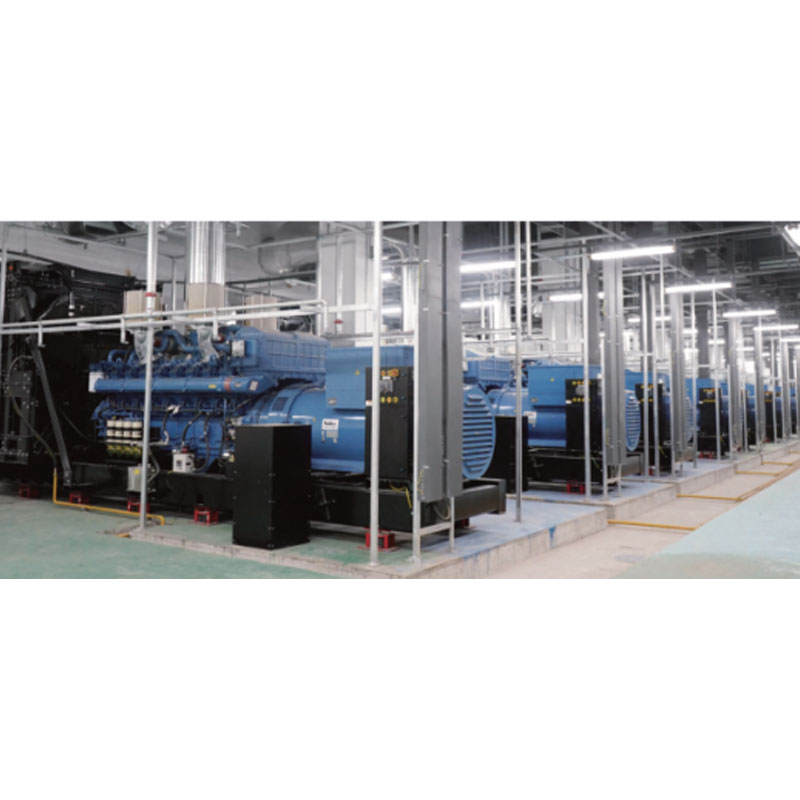
Of course, price is the first factor. But if it were only her, the market would have long been divided between Indian and some Turkish collectors. The Chinese offer wins as a whole. This is a ready-made “box”: from the design and supply of equipment to supervision of installation and personnel training. What does the “box” have to do with it? can be completely different - from a container station for a couple of megawatts to a more or less stationary unit for 20-30 MW.
Here lies the professional observation: engineering flexibility plays a key role. The same ?Yuke Electric? (a brand that grew out of the DEVER Electric team working since 2003) there is not one magical model in the catalog. There is a platform that is cut live, to suit the client. Do you need to adapt the burners to local high-sulfur fuel oil? Please. Increase filter life due to high dust levels? Solvable. This does not always go smoothly - sometimes our engineers spent months struggling to configure the boiler for frankly substandard fuel, which the customer called “fuel oil”. only by tradition. But this is the point: Chinese companies are often ready for experiments that a European or even Russian supplier will not do, citing guarantees.
Their websitevoyoko.ru, is a good example of this approach. You won't see just a list of units there. There is an emphasis on R&D, on the complex: “research and development, technical consulting, custom processing...?”. This is the language spoken by the very customer who has a unique problem.
Fuel paradox and real cases
An interesting point that is rarely written about in analytics: often the buyer of a Chinese fuel oil station is the one who already has fuel oil. It sounds absurd, but it is true. For example, a local oil production company that already operates its own GTU using associated gas, and heavy refining residues need to be disposed of somewhere. The construction of a fuel oil thermal power plant for its own needs and the sale of surplus to the network becomes not an energy project, but a logistics and economic project. The profit here is not from the sale of kilowatts, but from the disposal of a low-liquid product.
I personally came across a project in one of the CIS countries, where the customer was just such an oil refinery. They bought two Chinese power units, essentially to burn their own waste. The project was successful in terms of payback, but it gave rise to a bunch of technical puzzles - the same fuel oil was so viscous that it had to be heated in special tanks before supply. The Chinese managed to improve the preheating system, but this added both cost and time. For the customer this was the norm; he was looking at a payback period of 3-4 years.
Another common case is substitution. Not to build from scratch, but to replace outdated Soviet or European units from the 70s and 80s. Here, Chinese equipment often wins not so much in efficiency (their efficiency is average), but in maintainability and availability of spare parts. Try to find an original injector for the old Finnish "Värtsilya" in the outback of Mozambique. And for a Chinese installation, a container with spare parts is often included within the same contract.
Pitfalls: what is not visible in the advertising brochure
When working with this segment, one cannot idealize. The buyer often enters into a transaction with his eyes closed to some risks. The first is ecology. Modernfuel oil power plantscan be equipped with good gas cleaning systems, but this is an option that you need to pay for. And in 9 cases out of 10, the customer refuses it in order to reduce the cost of the project. As a result, after a couple of years, problems begin with local residents or new environmental standards that did not exist in the first place.
The second is long-term economics. Fuel oil is a fuel with an unstable price. A project that was considered profitable at $200 per ton can become ruinous at $400. Many buyers do not calculate this by looking only at capex. I saw a sad example in Sri Lanka: a factory bought a Chinese station when fuel oil was cheap. Two years later, prices soared and production costs became uncompetitive. The station was idle.
And third, the most everyday thing - personnel. The Chinese will deliver, install, carry out commissioning and training. But their specialists will leave, and local personnel, often with low qualifications, will be left alone with complex equipment. Hence - increased wear and tear, accidents due to operating errors and the very “unreliability” that is then attributed to the equipment, although the root of the problem lies elsewhere. Companies like ?Yuke? they are trying to combat this by offering long-term technical supervision and remote support, but this again depends on the client’s budget.
The future of the niche: compression, but not extinction
The demand for such solutions will not grow. The world is moving towards gas and renewable energy sources. But the niche won’t die for a very long time. Because the conditions described above - isolation, availability of specific fuel, urgency - will not go away. The buyer will simply become even more precise and demanding.
There is already a demand for hybrid solutions: fuel oil station + solar farm + battery system, where fuel oil plays the role of a backup and peak source. Chinese manufacturers that can offer such an integrated turnkey system will remain afloat. Those who will continue to simply sell ?iron boxes? for burning fuel oil, they will leave the race.
So who is the main buyer? As a result, he is a pragmatist, squeezed by circumstances. Not a rich country, and not always poor. More often, it is a commercial enterprise or local government agency that solves a momentary energy problem using the means available to it. He buys not the ideal, but the possible. And the Chinese industry, with all its flexibility and willingness to work in difficult conditions, has become for such a buyer an almost uncontested supplier of this “possible”. As long as such situations exist, there will be buyers from Chinese fuel oil power plants. Everything is simple and complex at the same time.
-


-
-


WeChat

-
WeChat