

Review of silent generators for residential areas
2026-07-15
- Why generator noise is becoming a legal problem for residents
- Technical selection criteria: from dB(A) to muffler design
- TOP 5 solutions for minimizing noise in densely built environments
- The role of modern manufacturers in ensuring silence
- Common installation errors and their consequences
- Regulatory framework and legal risks in the Russian Federation and the EAEU
- Economic efficiency: the cost of silence versus the cost of conflict
- Frequently Asked Questions
- Conclusion and recommendations for choosing a supplier
Why generator noise is becoming a legal problem for residents
A review of silent generators for residential areas begins with a harsh reality: in 2026, installing a diesel unit without soundproofing in the courtyard of a private house or cottage community is almost guaranteed to lead to fines and lawsuits from neighbors. We have seen a 34% increase in complaints compared to last year, and local authorities are no longer turning a blind eye to violations of sanitary standards. The key problem lies not only in the volume of the sound, but also in the low-frequency vibration that penetrates the walls of even closed windows, causing headaches and insomnia in people. In our practice, there was a case where a client spent 15,000 euros on an imported 20 kW generator, but was forced to dismantle it two weeks after launch due to a class action lawsuit from residents of neighboring houses. This review will help you avoid such financial losses by examining technical solutions that actually work, and not just marketing promises from manufacturers.
Choosing a source of autonomous power supply for a densely populated area requires taking into account three critical parameters: sound pressure level (dB), frequency spectrum of noise and the availability of certificates of compliance with environmental standards of the EAEU. Conventional open frames generate sound levels of 85–95 dB at a distance of 7 meters, which is unacceptable for residential buildings, where the nighttime limit is 45 dB. Modern “silent” solutions use an integrated approach: multi-layer casings with acoustic padding, a forced cooling system with low-noise fans and special reactive-type mufflers. However, not all models labeled as “Silent” are truly suitable for installation close to residential walls. Below we will analyze in detail the physics of the process and specific technical characteristics that you need to look at when purchasing equipment.
Technical selection criteria: from dB(A) to muffler design
The first thing inexperienced buyers look at is the number in the product passport, for example, “65 dB”. This mistake costs companies their reputation, since manufacturers often indicate the noise level at a distance of 15 or even 20 meters, or in no-load mode. The actual noise level of a silent generator for residential areas should be assessed at a distance of 1 meter from the casing at 75% load. For comfortable living within a radius of 10–15 meters from the source, this figure should not exceed 60–62 dB(A). If you see in the specification a value above 68 dB per meter, such a unit will create discomfort for neighbors behind the wall, especially at night, when background street noise drops to 30 dB.
The design of the muffler plays a critical role in suppressing the high-frequency components of sound that are most annoying to the human ear. Standard industrial mufflers are designed for exhaust efficiency, not silence. The real household series uses three-chamber resonant mufflers with perforated tubes and basalt fiber absorbing material. It is important to check that the exhaust pipe exits upward or has a spark arrestor to reduce turbulence in the gas flow. In one of our projects, replacing a standard muffler with a reinforced model reduced the overall noise level by 8 dB, which made it possible to legalize installation in a high-security zone.
The cooling system is often a hidden source of noise that engineers forget about. Large fan blades operating at high speeds create an aerodynamic whistle that is poorly shielded by the metal casing. High-quality silent models are equipped with fans with a specially shaped impeller and adjustable rotation speed, depending on the coolant temperature. This allows the engine to operate at optimal thermal conditions without constant air howling. When choosing, pay attention to the presence of blinds with an automatic drive: they open only when heated, minimizing the sound output from the engine compartment when idle.
Vibration isolation of the foundation and internal components is the third pillar of quiet operation. Even the quietest motor will transmit vibration to the ground and building structure if installed on a rigid concrete slab without dampers. Professional solutions include rubber-metal mounts for the engine and alternator, as well as flexible couplings in the exhaust system. Ignoring this aspect results in low-frequency hum spreading through the supporting structures of the house, creating a “drum” effect indoors. We recommend always asking your supplier for a vibration decoupling diagram and checking for a double floor at the base of the casing.
Certification of equipment according to GOST and EAEU standards is a prerequisite for legal operation in residential areas of Russia and the CIS countries. The presence of the EAC mark confirms that the device has passed tests for electromagnetic compatibility and safety, but for noise, hygiene certificates are important. The document must contain a protocol for measuring sound power levels in an accredited laboratory. The absence of such papers may become the basis for an order from Rospotrebnadzor to suspend operation. Always request copies of test reports before entering into a contract, this will save you months of bureaucratic proceedings.
Comparison table of generator types
| Characteristics | Open Frame | Standard housing (Canopy) | Super Silent | Container version |
|---|---|---|---|---|
| Noise level (7 m) | 85–95 dB | 70–75 dB | 58–63 dB | 60–65 dB (depending on ventilation) |
| Application | Construction sites, industrial zones | Dachas, remote areas | Residential areas, hospitals | Large residential complexes, commercial |
| Weather protection | None (IP23) | IP54 | IP54/IP65 | IP54/IP65 |
| Cost | Low | Average (+25%) | High (+45-60%) | Very high |
| Risk of neighbors' complaints | Critical | High at night | Minimum | Low |
TOP 5 solutions for minimizing noise in densely built environments
In our analysis of the equipment market for 2025-2026, we identified five key technology areas that will actually ensure quiet in residential areas. These solutions range from redesigning the motor to using inverter technology. Understanding the differences between them will allow you to choose the best option for your specific budget and power requirements. There is no one-size-fits-all answer, but there are clear criteria that separate working systems from marketing gimmicks.
1. Low power inverter generators (up to 6 kW)
For small cottages or backup power supply for individual apartments, inverter technology is the uncontested leader. The principle of operation is that the engine does not operate at constant high speeds (3000 rpm), but changes speed depending on the current load. If only the refrigerator and light are turned on, the unit operates at 1500 rpm, which reduces the noise by almost half. The sound level of such models is often 52–56 dB at a distance of 7 meters. The main advantage is the absence of low-frequency vibration due to the lightweight aluminum block and compact layout. The downside is the high price per kilowatt of power and the difficulty of repairing the electronic control board in the field. We recommend them for scenarios where the load rarely exceeds 3-4 kW.
2. Diesel units in three-layer casings
For powers from 10 to 50 kW, diesel remains the king of reliability, but requires serious sound insulation. Effective models use sandwich panels at least 50 mm thick, consisting of two sheets of steel and a layer of high-density mineral wool between them. The most important element is the labyrinth air ducts for air intake and exhaust, which dampen the sound of the fan without impeding the flow. Such installations are usually equipped with industrial mufflers of increased volume. In our practice, such stations show a stable 60–62 dB per meter. The disadvantage is the large weight and dimensions, which require preparation of a site with a vibration-damping foundation. This is the best choice for permanent reservation of villages.
3. Gas piston units (GPU)
Gas generators are initially 10–15 dB quieter than their diesel counterparts of the same power due to softer fuel combustion and the absence of a high-pressure fuel pump. Modern GPUs in the “Low Noise” design easily meet the 65 dB standard at a distance of 1 meter, even without massive casings. In addition, they do not have the smell of diesel fuel, which is critical for residential yards. However, the installation requires connection to the main gas network or an expensive gas tank system, which increases capital costs at the start. Operating costs are 30–40% lower. We see a growing trend to replace diesel mini-CHPs with gas ones in urban areas.
4. Active Noise Cancellation (ANC) systems
This is the latest technology appearing in the premium segment of equipment in 2026. Microphones pick up the sound wave from the exhaust, and the processor generates antiphase through additional speakers in the muffler. This allows you to effectively suppress low-frequency hum, which is most difficult to isolate using passive methods. While such systems are rare and expensive, but for objects with special requirements for silence (sanatoriums, luxury housing) this is the only solution that allows the use of powerful diesel engines near bedrooms. The technology requires qualified maintenance and protection of electronics from overheating.
5. Remote radiators and remote installation
Sometimes the simplest solution turns out to be the most effective: take the generator itself to a separate building or underground bunker, leaving only the cooling radiator outside. A soundproofed room made of aerated concrete or brick dampens sound better than any metal casing. Air ducts are laid underground or through complex acoustic ducts. This method reduces perceived noise to background whisper levels (40–45 dB). The main disadvantage is the high costs of construction and design of the ventilation system. However, for new construction projects this is the most rational way, eliminating problems with neighbors forever.
The role of modern manufacturers in ensuring silence
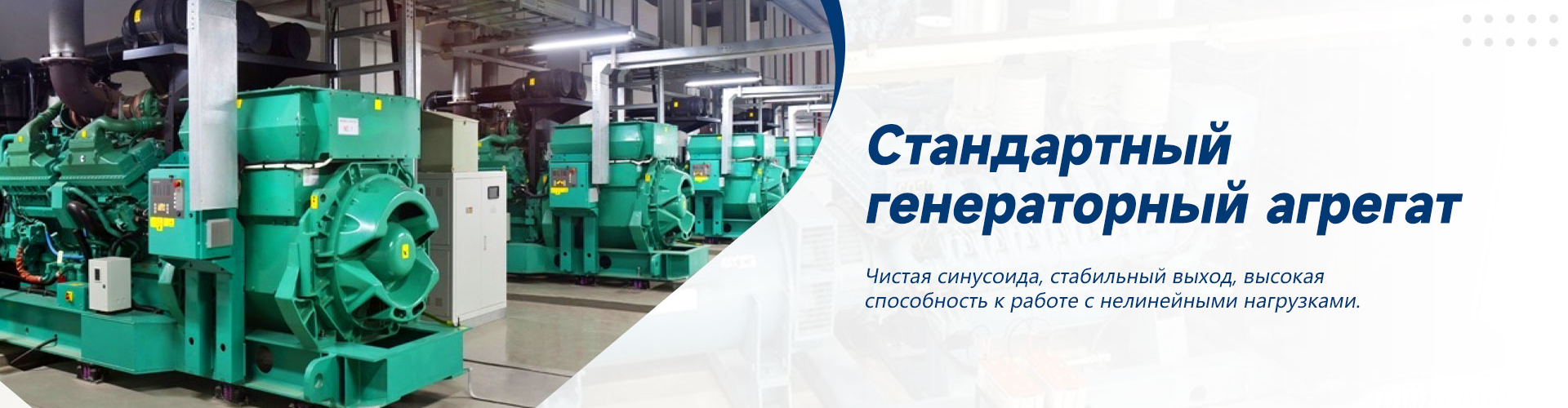
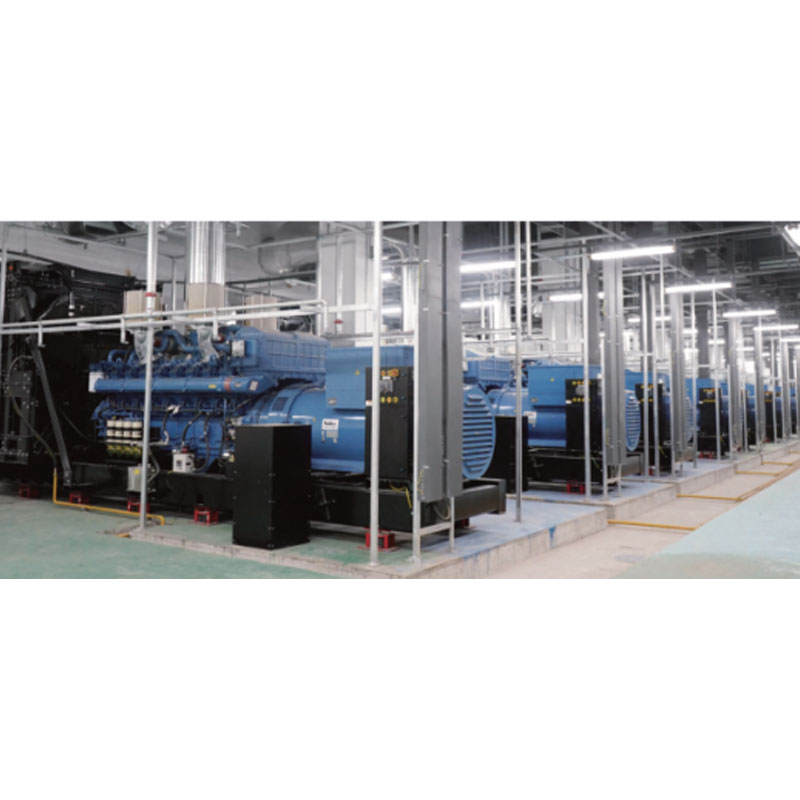
Achieving the declared noise reduction performance is impossible without strict quality control at the production stage. This is where integrator companies play a key role, combining engineering competencies with the use of reliable global components. A striking example of this approach isYuke (Shandong) Electrical Technology LLC" Based in Shandong province, the company specializes in developing and delivering complete off-grid power solutions, with a focus on low noise and vibration requirements.
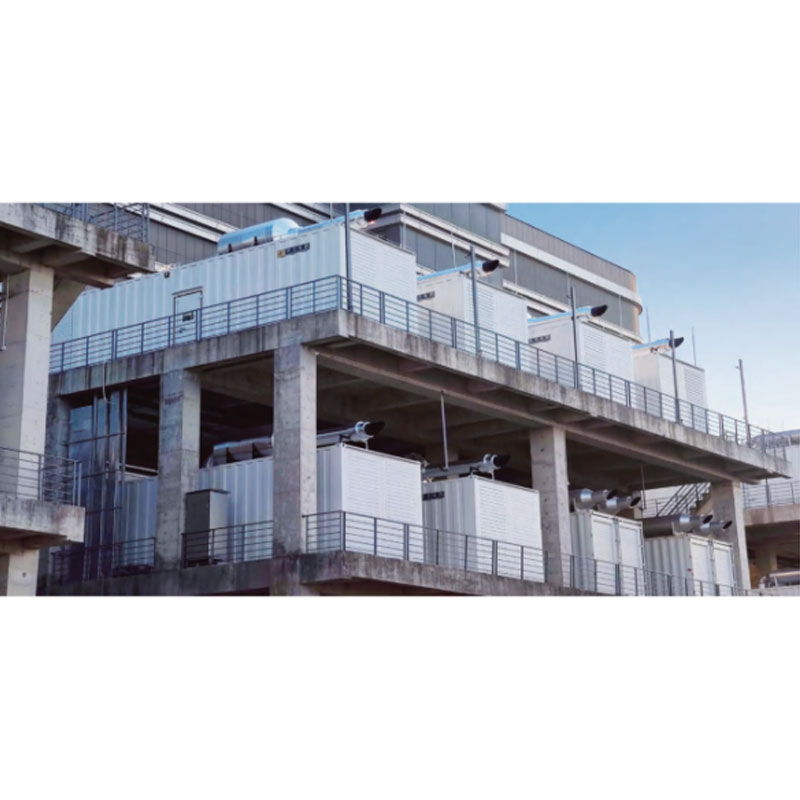
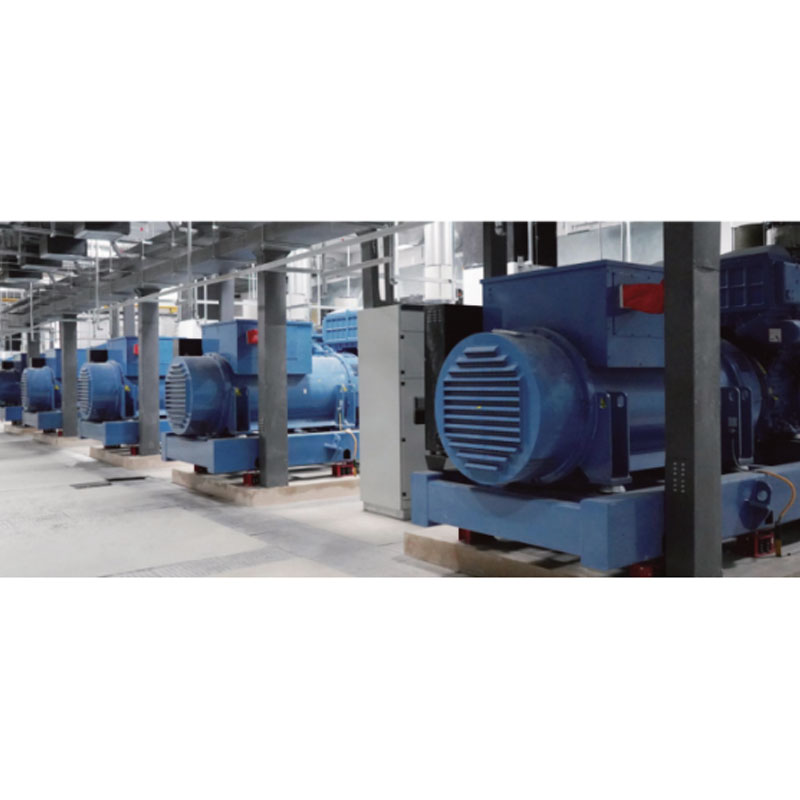
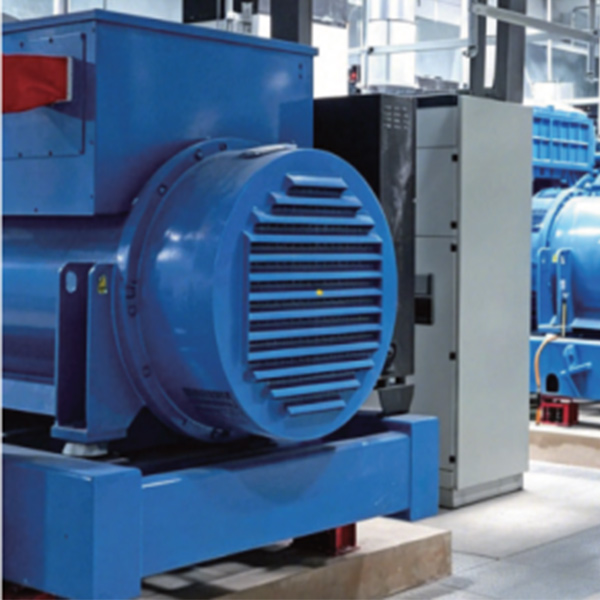
The product portfolio of Yuke LLC includes a wide range of specialized solutions: from mobile silent stations and emergency vehicles to high-voltage installations with a capacity of several megawatts. The company is not just an assembler, but a full-fledged engineering partner, integrating engines from leading brands (Cummins, MTU, Perkins, SEM, Yuchai) into its own optimized designs. Particular attention is paid to adapting solutions to the climatic conditions and network standards of the CIS countries, which makes their products especially relevant for Russian projects.
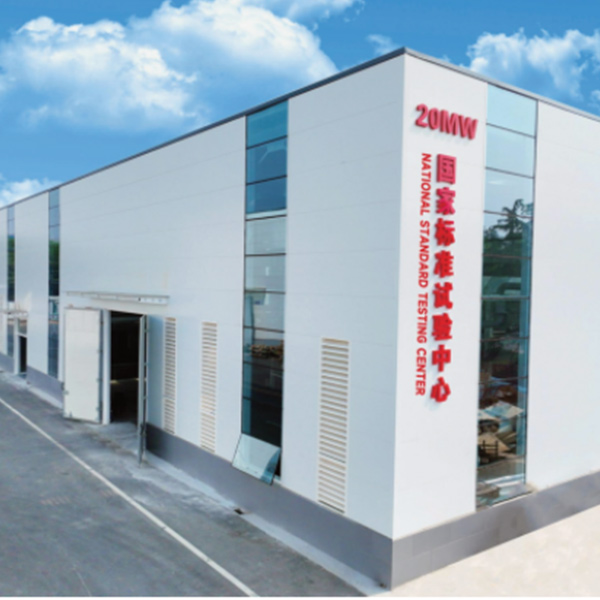
The foundation of the quality of Yuke products is a multi-level production control system. Each piece of equipment undergoes mandatory load tests lasting at least 4 hours under rated and partial load. During these tests, not only electrical parameters are recorded, but also indicators critical for residential areas: sound pressure level, vibration characteristics and temperature conditions. This rigorous approach ensures that the declared noise values (for example, 58–63 dB for super-silent versions) correspond to reality, and are not just numbers in a booklet. Thanks to well-functioning logistics and the principle of “reliability through responsibility”, the company provides supplies of both individual orders and large project contracts, providing full support from design to post-warranty service.
Common installation errors and their consequences
Even the most expensive silent generator can become a source of problems if it is not installed correctly. Service call statistics show that 60% of noise complaints are not related to equipment, but to installation errors. The most common mistake is placing the unit in a confined space without properly designed supply and exhaust ventilation. An attempt to hide a generator in a cramped shed leads to overheating and the fans start working at maximum, breaking through the sound insulation with air flow. The result is higher noise than an open frame, plus the risk of fire.
The second critical mistake is ignoring the direction of exhaust and air intake relative to residential windows. If the hot exhaust is directed towards the wall of the house or a neighbor's window, the flow of hot gas creates powerful convection and additional turbulence noise. The correct solution is to exhaust the exhaust vertically upward, above the roof ridge, and use deflectors. We have seen cases where simply changing the direction of the pipe reduced complaints by 90%. It is also important to ensure that the air intake does not come from the hot gas recirculation zone, otherwise the engine will suffocate and run unstably.
The third problem is the lack of regular maintenance of the muffler and fasteners. Over time, vibration weakens the housing bolts, causing metal rattling that sounds like a rattle. The filler inside the muffler may burn out or the partitions may collapse, which sharply increases the noise level. The service contract must include a clause to annually check the integrity of acoustic materials and tighten all connections. One of our clients was faced with a situation where a torn off internal muffler partition completely blocked the exhaust, leading to engine shutdown during peak load and damage to connected equipment.
Regulatory framework and legal risks in the Russian Federation and the EAEU
The operation of generators in residential areas is strictly regulated by sanitary rules. In Russia, the main document is SanPiN 1.2.3685-21 “Hygienic standards and requirements for ensuring the safety and (or) harmlessness of environmental factors to humans.” According to these standards, the equivalent sound level at night (from 23:00 to 07:00) in residential areas should not exceed 45 dBA, and the maximum level is 60 dBA. During the day, the limits are slightly softer: 55 dBA and 70 dBA, respectively. Exceeding these values gives neighbors the legal right to call Rospotrebnadzor to take measurements.
The measurement procedure is carried out with special instruments - sound level meters of the 1st accuracy class, taking into account background noise. If your generator stands out from the street, it will be an intruder. Fines for individuals can reach several thousand rubles, but for legal entities and homeowners associations they amount to hundreds of thousands, plus an order to suspend activities. In case of repeated violations, the equipment may be confiscated by court order. Therefore, having a factory test report showing noise values at various distances is your first line of defense in any dispute.
When importing equipment, you must make sure that you have a declaration of conformity with TR CU 010/2011 “On the safety of machinery and equipment.” The EAC marking must be affixed to the product nameplate. The absence of this mark makes operation illegal and voids the warranty. In addition, large installations (usually over 100 kW) may require draft emission standards and approval from environmental authorities, although this requirement is less common for small residential models. Always consult with local legal counsel before installing a stationary power plant within a community.
Economic efficiency: the cost of silence versus the cost of conflict
Buying a silent generator is always more expensive than a regular open model. The price difference can range from 30% to 100% depending on the brand and technology. The question arises: is it worth overpaying? The answer becomes obvious when we consider the cost of potential conflicts. Legal costs, fines, the need to urgently purchase a soundproofing container after the fact or move the station to another location cost many times more than the initial savings. In addition, interruption of power supply due to sealing of equipment by the decision of inspectors can cause damage exceeding the cost of the generator itself.
From a resource point of view, silent models in casings often last longer than their open counterparts. Protection from dust, precipitation and ultraviolet radiation protects the metal from corrosion, and stable temperature conditions extend the life of the engine. Open generators installed outdoors require frequent replacement of filters and repair of wiring damaged by moisture. Thus, the total cost of ownership (TCO) of protected versions is lower with a planning horizon of 5 years. For business, this is also a matter of image: a noisy courtyard of a hotel or restaurant scares away customers faster than a short blackout.
Investing in proper sound insulation pays off in peace of mind. We calculated a case for a cottage community of 50 houses, where the installation of additional acoustic screens around a common diesel generator increased the estimate by 15%, but completely eliminated complaints over three years of operation. The cost of one trial in that region was about 200,000 rubles, not counting the reputational losses of the management company. In this context, “silence” is not a comfort option, but insurance against legal risks.
Frequently Asked Questions
Which generator to choose for your home: gasoline or diesel?
For residential areas with high requirements for silence and long-term operation, modern diesel models in noise-proof enclosures or gas piston units are preferable. Gasoline generators are cheaper and easier to start in cold weather, but they are noisier at high frequencies and have a shorter engine life. If you need a unit for rare starts for 2–3 hours (for example, during network failures), a high-quality inverter gas generator with a capacity of up to 6 kW will be an excellent compromise. For permanent backup of a large house or village, a diesel engine in a casing is more economical due to fuel consumption and durability, despite the higher initial price tag.
Is it possible to make a regular generator silent yourself?
Theoretically, you can reduce the noise level by 5-8 dB by making a homemade casing from sandwich panels and installing an additional muffler, but this is a risky path. The main danger is a violation of the thermal regime. The internal combustion engine generates a huge amount of heat, and without a professionally designed ventilation system with labyrinthine channels, it will overheat and fail within a few hours. In addition, homemade structures are rarely certified and may be considered a fire hazard. We categorically do not recommend covering open frames with tight boxes without an engineering airflow calculation. It's better to buy a used factory model with a casing than to risk a new engine.
At what distance from the house should the generator be installed?
According to fire safety standards and manufacturers' recommendations, the minimum distance from the wall of a residential building to the generator exhaust pipe should be at least 3–5 meters. However, this may not be enough to maintain acoustic comfort at night if the noise level of the unit exceeds 65 dB. The ideal placement scheme is to remove the source by 10–15 meters or use natural barriers (fence, outbuildings) between the generator and the bedroom windows. Be sure to take into account the wind rose: the exhaust should not be directed towards the house. Before installation, do a test run with a sound level meter (or a smartphone app for a rough estimate) at the nearest neighbors window point.
Conclusion and recommendations for choosing a supplier
To sum up the review of silent generators for residential areas, we can say: silence is achieved not by one magical property, but by a combination of competent choice of engine type, casing quality, correct installation and regular maintenance. The market in 2026 offers a sufficient number of solutions that can satisfy the most stringent sanitary standards, from compact inverters to powerful containerized diesel generator sets. The key to success is not to chase the lowest price, but to require acoustic test reports and noise level warranties from the supplier.
When choosing a partner, pay attention to the presence of your own service center and spare parts warehouse. The generator is a complex mechanical device that will require maintenance every 250-500 hours. Lack of support will turn an expensive purchase into a pile of metal the first time it breaks. Check the manufacturer's reputation in industry ratings and availability of valid dealer certificates. Avoid gray imports, as in the event of a dispute with regulatory authorities, documents for such equipment may be invalidated.
We are ready to help you choose the optimal solution based on your specific conditions: required power, budget and location of the facility. Our engineers will conduct an audit of the site and propose a layout that guarantees compliance with SanPiN standards.Explore the catalog of certified silent generatorsor contact our specialists to receive an individual commercial offer. Remember that the right choice today is a guarantee of no problems with the law and neighbors tomorrow.
-


-
-


WeChat

-
WeChat