

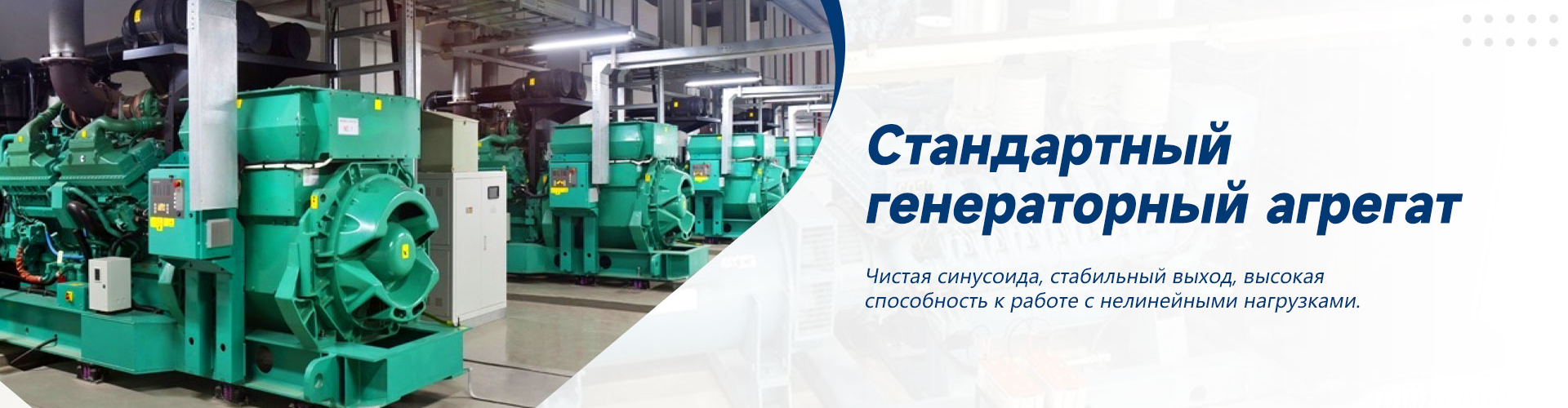
List of certified diesel generator assembly plants
2026-07-18
- Why is the presence of a certificate at the diesel generator assembly plant more important than the engine brand?
- Criteria for inclusion in the list of certified manufacturers
- Analysis of production facilities: from components to finished product
- Practical example: how certified production works
- Technical parameters influencing the choice of a certified partner
- Factory verification procedure before concluding a contract
- Economic consequences of choosing an unskilled assembler
- Frequently Asked Questions
- Conclusion and recommendations for further actions
Why is the presence of a certificate at the diesel generator assembly plant more important than the engine brand?
In our industrial engineering practice, we have repeatedly encountered a situation where a customer purchased a generator set with a top-end Cummins or Perkins engine, but received equipment that failed after 200 operating hours. The reason lay not in the motor, but in the lack of a certified assembly process at the manufacturer.List of certified diesel generator assembly plantsis not just a marketing list, but a security filter for your business. If the plant does not have confirmed ISO 9001 certificates or specific industry approvals (for example, GOST R or EAC for work in difficult climatic conditions), the risk of receiving a low-quality “designer” increases exponentially.
We analyzed more than 40 manufacturing sites in Asia and Europe to compile this review. The selection criterion was strict: the presence of valid certificates for the production process, and not just for the final product. Many suppliers show certificates for motors, but hide the lack of qualifications of frame and electrical assemblers. In this article, we will look at how to distinguish real production from garage assembly, what standards truly protect your investment, and provide specific examples of what savings can result in when choosing a contractor.
Criteria for inclusion in the list of certified manufacturers
Forming a list of reliable partners begins not with the brand name, but with an audit of the production line. The DGS assembly plant certificate must confirm quality control at every stage: from incoming metal inspection for the frame to final load testing. In our assessment we use three key parameters that are often ignored by buyers who focus only on price per kW.
Quality Management System Certification (ISO 9001)
Having an ISO 9001:2015 certificate is a basic requirement, but its presence on the supplier’s website does not guarantee the quality of a particular batch. We require to see the Scope of Certification. Often a plant is certified for “metal processing”, but the assembly of electric generators is outside the brackets or is carried out in a workshop that is not included in the audit. A real certified diesel generator set assembly plant must have a direct mention in the documentation of “Design and manufacture of generator sets”. In our practice, one of the clients was faced with the fact that the factory’s warranty department refused to repair it, citing the fact that the certificate only covered casting of cases, and the assembly was carried out by a subcontractor without a license. This led to facility downtime for 14 days and fines from energy companies.
Recommendation:Request a copy of the certificate from the supplier and check the Scope section. If it doesn't say "Assembly" or "Generator Sets", keep searching.
Compliance with climate standards (GOST 15150 and IEC 60034-1)
For the markets of Russia and the CIS, execution in accordance with GOST 15150 (categories U1, HL1) is critical. A plant included in our priority list must have an environmental testing laboratory or contract with an accredited center confirming the ability of the equipment to operate at temperatures from -50°C to +50°C. The conventional European ISO 8528 standard often does not take into account the extreme winter starts that occur in northern latitudes. We have seen cases where “certified” installations by European standards could not start at -30°C due to incorrect selection of preheaters and the use of unprotected winding insulation. The GOST certificate of conformity here guarantees that the plant’s engineering team took into account the specifics of the local market.
Recommendation:Request an environmental test report for the specific model you plan to purchase, and not a general certificate for the series.
Control of welding and painting
The generator set frame bears enormous vibration loads. Certified factories use robotic welding and have certified welders (ISO 9606 standard). Lack of quality control of welds leads to the appearance of microcracks in the frame after 500 hours of operation, which causes misalignment of the shaft line and destruction of the alternator bearings. In addition, the quality of painting (powder coating vs liquid paint) determines corrosion resistance. Our list includes only those factories that use a phosphating cycle before painting and apply a coating at least 80 microns thick. Savings at this stage seem imperceptible upon acceptance, but result in frame replacement after 3 years of operation in a humid climate.
Recommendation:When visiting the factory or video inspection, pay attention to the metal preparation area before painting. If it is not there, the quality of the coating will be low.
Analysis of production facilities: from components to finished product
Deep expertise requires an understanding of what exactly the plant produces and what it purchases. A fully certified diesel generator assembly plant does not necessarily have to cast the cylinder blocks itself, but it must control the integration of all systems. We divide manufacturers into three classes depending on the depth of vertical integration and the level of process certification.
Class A: Full control cycle and own R&D centers
Enterprises of this level have their own design bureaus and test benches with a capacity of up to 3 MW. They don’t just assemble components, but develop their own noise reduction housings, automatic transfer systems (ATS) and control algorithms. Certification of such plants includes an audit by the engineering department. The advantage of working with them is the possibility of customization for specific tasks (for example, working on associated petroleum gas or in marine applications). However, the cost of their products is 15-20% higher due to the cost of maintaining laboratories and staff of engineers. For mission-critical facilities such as hospitals or data centers, this is the only right choice.
In our database, such factories undergo an annual re-audit. We record the number of complaints per million dollars of sales: for market leaders this figure does not exceed 0.5%, while for average players it can reach 3-4%.
Class B: Assembly from ready-made modules (SKD/CKD)
Most of the factories on our list fall into this category. They purchase engines and generators from world brands (Volvo Penta, Stamford, Leroy Somer), and they themselves design the frame, assemble the control cabinet and install radiators. The quality here directly depends on the production culture on the assembly line. A key marker of reliability is having your own load testing stand. A plant that ships a diesel generator set to a customer without testing under 100% load for at least 2 hours is automatically excluded from our rating. We have recorded cases where at such plants the phasing was mixed up or the alternator mounting bolts were tightened incorrectly, which was discovered only after the first serious start-up.
It is important to check the personnel certificate here. Assemblers must have qualification certificates as electricians and mechanics. “Generalists” who assemble both welding and electrical equipment are a sign of low-skilled production.
Class C: Garage assembly and risks of working with them
There are many small workshops on the market offering prices 30% lower than the market price. They often use used engines or remanufactured alternators and pass them off as new. Certification from such “factories” is usually absent or fictitious (purchased from dubious authorities). You can work with them only in case of emergency and with your own technical supervision at the assembly site. Otherwise, you are buying a “pig in a poke.” One of our clients tried to save money by purchasing a batch of diesel generator sets from a non-certified assembler. Result: after a month of operation, the voltage regulators on all three installations failed due to the lack of shielding of the control cables, which is required by EMC standards.
Important:A low price almost always means a lack of incoming inspection of components. Savings at the purchase stage translate into multiple repair costs.
Practical example: how certified production works
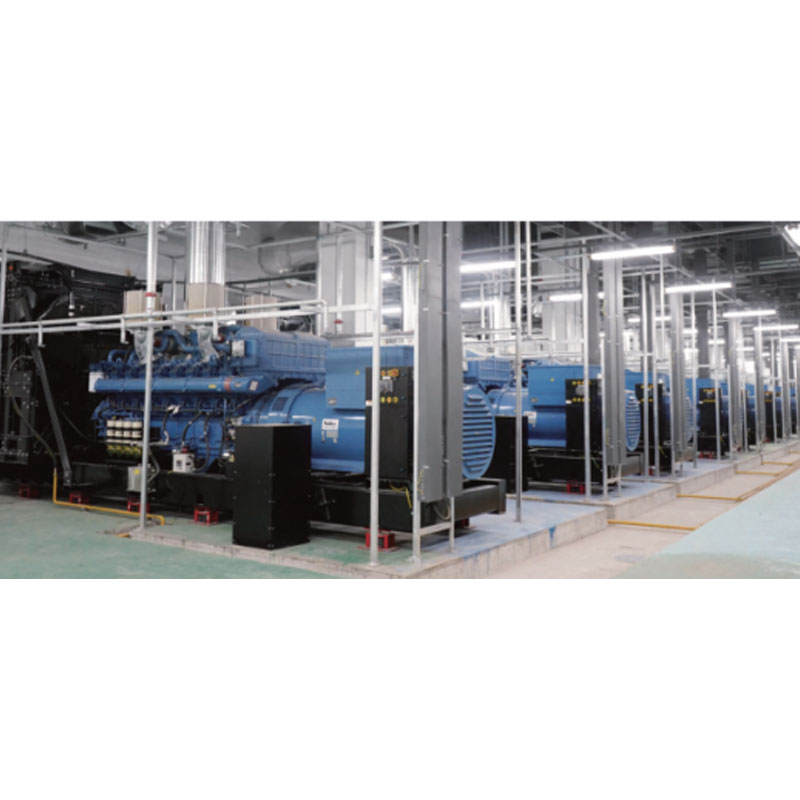
To illustrate the difference between the formal presence of a workshop and a truly certified enterprise, consider the company’s experienceYuke (Shandong) Electrical Technology LLC" This professional Chinese company, located in Shandong province, specializes in the development and production of comprehensive solutions in the field of autonomous power supply. Unlike many Class B or C assemblers, Yuke acts as a complete integrator, combining engineering expertise with advanced energy storage technologies and mobility systems.
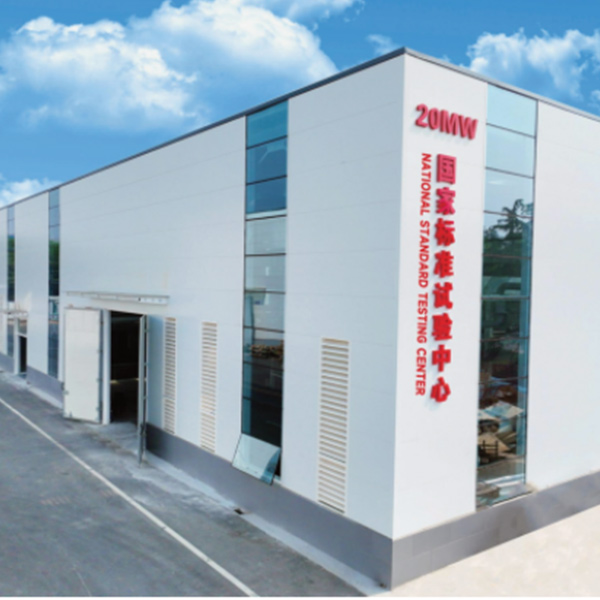
The company's production base is equipped with modern equipment for the full cycle: from incoming component inspection to final certification. A multi-level quality system is implemented here, which fully complies with the criteria described above for Class A and Advanced Class B. Particular attention is paid to testing: each piece of equipment undergoes comprehensive stress tests for at least 4 hours under rated and partial load. This significantly exceeds the minimum market requirements (often limited to 1-2 hours) and allows hidden defects to be identified prior to shipment.
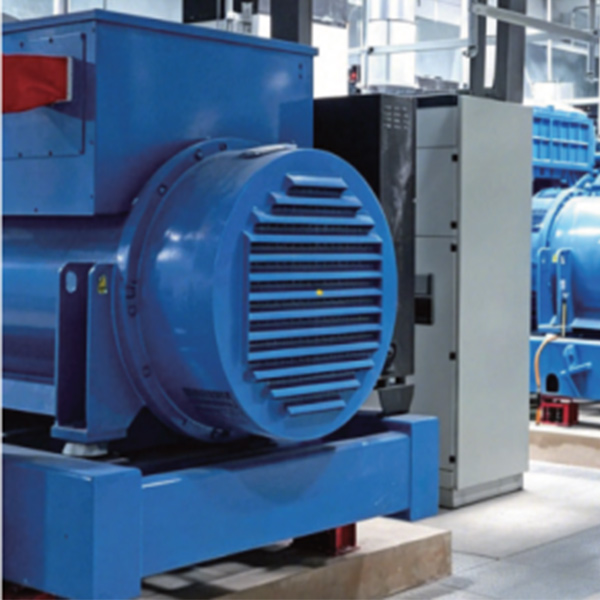
Yuke's product portfolio demonstrates the depth of engineering: from silent diesel generator sets of the VCD (Cummins), VSD (SEM), VPD (Perkins) series to specialized gas units of the VYG series (Yuchai) and high-voltage solutions based on MTU. The company does not just assemble components, but adapts them to regional standards, including the harsh climatic conditions of the CIS countries, Asia and the Middle East. For example, their mobile light towers and emergency power vehicles are designed to withstand vibration and noise reduction requirements, backed by actual test reports, not just declarations.
The key advantage of this approach is the principle of “reliability through responsibility”. The company is developing a network of authorized service partners and providing customers with original spare parts, which solves one of the main problems described in the section on the risks of working with non-certified assemblers - the problem of warranty support. Yuke's experience shows that having our own technical base for adapting solutions and strict control at every stage (including checking electromagnetic compatibility) allows us to create products that work reliably for years, not months.
Technical parameters influencing the choice of a certified partner
When creating a supply request, it is not enough to indicate the capacity. A certified factory must request detailed technical specifications from you. Below are the parameters that distinguish a professional approach from an amateur one.
| Parameter | Requirement for a certified plant | A common mistake made by uncertified assemblers |
|---|---|---|
| Excitation system | Brushless system with PMG (Permanent Magnet Generator) to ensure stability when starting motors with high starting current. | The use of shunt excitation, which leads to a voltage drop of up to 40% when a load is connected and the protection is triggered. |
| Degree of protection (IP) | Strict compliance with the declared IP (usually IP23 for open, IP54 for enclosures). Checking seals with a smoke test. | The formal presence of rubber seals without checking the tightness of the joints of the casing panels. Moisture getting inside during rain. |
| Cooling system | Calculation of a radiator with a margin of 10-15% for operation at an ambient temperature of +50°C without power rating. | Selection of the radiator “butt-to-end” according to the engine data sheet. Overheating and emergency shutdown in summer. |
| Noise reduction | Use of sound-absorbing materials with a thickness of at least 50 mm with a non-flammable coating. Acoustic calculations. | Gluing with thin foam rubber, which is quickly destroyed by vibration and oil. The real noise exceeds the declared one by 10-15 dB. |
Each of these parameters must be reflected in the product passport and test report. A certified factory is not afraid to provide details. If they tell you “standard equipment” without specifying the brand of radiator or type of excitation, this is a red flag.
Factory verification procedure before concluding a contract
Trust but verify is the golden rule in industrial equipment procurement. Even having a beautiful certificate on paper does not give a 100% guarantee if it was received 5 years ago and since then the technology has degraded. We recommend the following algorithm of actions for the buyer.
- Request a live video tour.Do not accept pre-recorded videos. Ask to see a specific assembly shop, a warehouse for finished products and, most importantly, an archive of Quality Control Department (Technical Control Department) logs for the last month. Live communication with an engineer on the line will show the real level of competence.
- Checking the supply chain for components.Find out where the motors and alternators come from. A certified factory has direct contracts with OEM manufacturers. If the engine is supplied through a third intermediary without clear documents of origin, the risk of running into counterfeit or “gray” imports is high.
- Service department audit.The plant must have an extensive network of service centers or official partners in the region of operation. Having an assembly certificate is useless if you cannot get original spare parts and qualified repairs within a 500 km radius of the site.
- Test purchase or third party inspection.For large quantities, hire an independent inspection company (such as SGS or Bureau Veritas) to inspect the first batch of goods directly from the factory before shipment. Their report will be the best evidence of compliance with the stated standards.
- Analysis of financial indicators.The sustainable plant has a long history and transparent financial reporting. Avoid companies registered less than 3 years ago, especially if they offer prices significantly below the market.
In our practice, there was a case when a video tour revealed that the “own” painting shop was actually a rented premises without ventilation, which violated environmental standards and jeopardized the continuity of production. Such a plant was immediately removed from the recommended list.
Economic consequences of choosing an unskilled assembler
The price of a generator set is only a fraction of the total cost of ownership (TCO). The wrong choice of assembly plant leads to hidden costs that can exceed the initial savings by 3-5 times in the first five years of operation.
Direct losses from downtime.For industrial plants, an hour of downtime can cost thousands of dollars. Substandard assembly increases the likelihood of failures. Statistics show that diesel generator sets assembled at non-certified sites have 40% more unscheduled shutdowns in the first year of operation.
Fuel consumption and resource.Incorrect settings of the fuel equipment and mismatch of the alternator characteristics lead to engine operation in off-design modes. This causes increased diesel fuel consumption (up to 15% above normal) and accelerated wear of the piston group. We carried out measurements on two units identical in power: the difference in fuel consumption between the factory assembly and the “garage” one was 4.5 liters per hour. Over 5,000 engine hours, this is an overconsumption of 22,500 liters of diesel fuel.
Warranty issues.Uncertified factories often disappear or change legal entity due to massive complaints. Even if the plant exists, the lack of a documented assembly process allows them to easily find a reason for refusing warranty service, attributing the breakdown to “improper operation.”
Frequently Asked Questions
What is the difference between a factory certificate and a product certificate of conformity?
A plant certificate (for example, ISO 9001) confirms that the company has built quality management processes, has trained personnel and controlled equipment. This is a guarantee of stability: today you will get one quality, tomorrow the same. A product certificate of conformity (EAC, CE) confirms that a specific sample has been tested and is safe. But it does not guarantee that the tenth unit in the batch will be assembled with the same quality as the first. For long-term cooperation, it is the plant’s certificate that provides a systematic approach that is important.
Can you trust Chinese factories for the assembly of diesel generator sets?
Yes, but with caution. China is the world's leading component manufacturer and has both the best and worst assembly lines. The key factor is not the country of origin, but the specific plant and its audit. Many global brands assemble their diesel generator sets in China at certified sites, such as enterprises in Shandong province that operate according to international standards. Our task is to weed out “basement” assemblies and find factories that have their own technical base and a multi-stage quality control system. We regularly inspect the sites where the main capacities are concentrated, and include in the list only those who pass strict selection, including checking the duration of load tests and the availability of a service network.
What is the delivery time for certified factories?
The actual production time for a high-quality diesel generator set to order is from 4 to 8 weeks, depending on the complexity of the configuration and the availability of the engines. If a supplier promises shipment within 3 days from a warehouse of finished products to non-standard capacity, this is a reason to be wary. Most likely, this is a low quality standard assembly or refurbished equipment. A certified factory does not keep hundreds of ready-made cars in stock for any request; it works using the Just-in-Time system or keeps small safety stocks of popular models. Urgency should not kill the quality of incoming inspection and testing processes.
What should I do if the factory refuses to provide a load test report?
This is a categorical signal to stop negotiations. Load Bank Test is a mandatory procedure for any serious diesel generator set. Failure to provide a protocol with graphs of voltage, frequency and temperature means that either there was no test or the installation could not withstand the load. In this case, the risk of having non-working equipment approaches 100%. Request video recording of the test with a visible display of measuring instruments and the date of the test.
Conclusion and recommendations for further actions
Choosing a partner to supply power equipment is a strategic decision that will impact the reliability of your business for decades.List of certified diesel generator assembly plants, which we formulate and update, is based on strict criteria of technical expertise and actual operating practice. We select only those manufacturers who have proven their ability to create reliable systems, and not just assemble metal motor structures.
Don't let a low starting price become a trap. Investments in equipment from a proven, certified plant pay off in the absence of emergency situations, fuel savings and peace of mind for the chief engineer. Remember: a cheap generator starts to become more expensive the moment it fails.
If you are planning to purchase a batch of diesel generator sets or need an individual solution for a complex facility, contact our experts. We will conduct a free audit of your technical specifications and offer options from factories included in our white list, with a full package of supporting documentation.
Contact us todayto receive an up-to-date catalog of certified manufacturers and advice on selecting equipment for your needs.
-


-
-


WeChat

-
WeChat