

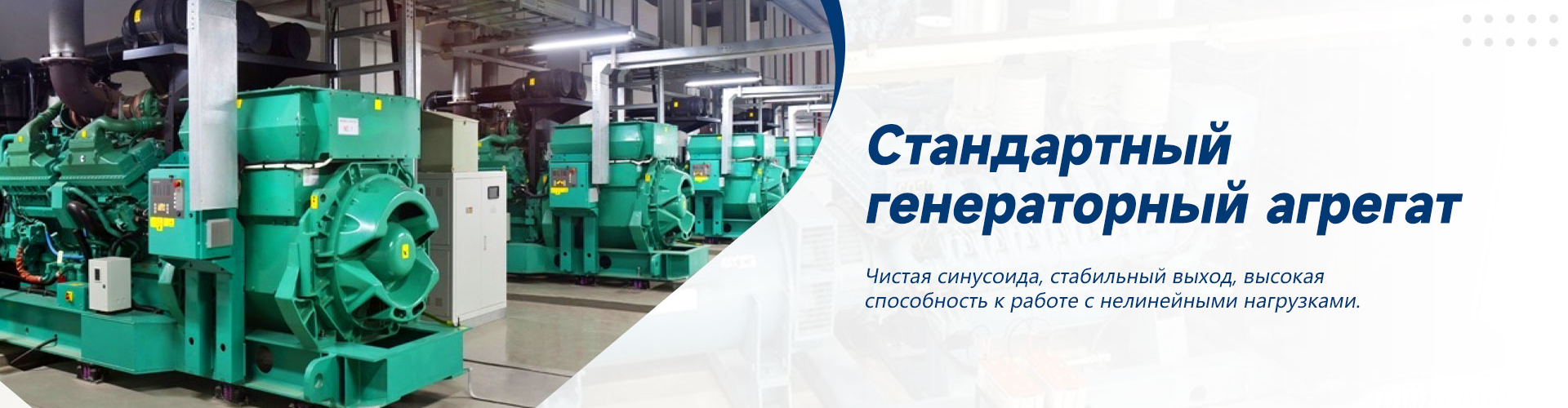
Industrial power station: design and installation
2026-07-11
- Key stages of creating an energy facility: from concept to commissioning
- Technical specifications and pre-project analysis: the foundation of reliability
- Choice of generation technology: diesel, gas or hybrid solutions
- Engineering design and documentation approval
- Professional installation: technology and quality control
- Commissioning and commissioning
- Operation, maintenance and modernization
- Conclusion: Investing in Energy Independence
Key stages of creating an energy facility: from concept to commissioning
Development and implementation of the projectindustrial power station: design and installationis not just the installation of equipment, but a complex engineering process that determines the energy security of the entire enterprise for decades to come. In our practice, we have repeatedly encountered a situation where an attempt to save money at the design stage led to losses exceeding the cost of the station itself by three to four times during the first two years of operation. Industrial generation requires taking into account hundreds of variables: from harmonics in the network to the temperature conditions of engine operation in specific climatic zones. This article was written by engineers who personally installed stations with a capacity of 500 kW to 50 MW in the Far North, desert regions and aggressive chemical industries. We will not use abstract phrases about “high quality”, but will analyze specific technical solutions, GOST regulatory requirements and real cases where errors cost millions of rubles.
The purpose of this manual is to provide the technical director or chief power engineer with a clear algorithm of actions. You will learn how to correctly formulate technical specifications, why the choice between diesel and gas generation depends not only on the price of fuel, and what hidden risks parallel work with the network entails. The information is based on the latest 2025-2026 standards, including stricter emissions and power factor requirements. If you are planning to build a new substation or upgrade an existing one, this resource will be your minefield map to study before taking your first step.
Technical specifications and pre-project analysis: the foundation of reliability
Any successful project begins not with choosing a generator brand, but with an in-depth audit of current energy consumption and forecasting future loads. An error at this stage is fatal: a station that is too powerful will operate in “wet stacking” mode, quickly failing, and a station that is not powerful enough will lead to emergency shutdowns of critical equipment. In our company, we use a methodology for collecting data for at least 12 months, analyzing daily and seasonal consumption peaks. We have seen cases where customers were guided by the installed capacity of all consumers, ignoring the simultaneity factor, which led to the purchase of redundant equipment costing an extra 30% of the budget.
The first step is to determine the category of power supply reliability according to the PUE (Electrical Installation Rules). For industrial facilities of categories I and II, the presence of an automatic transfer switch (ATS) with a switching time of less than 0.3 seconds is a mandatory requirement, not an option. It is important to understand the difference between backup and main modes of operation. If yourindustrial power stationwill be used as the main source of energy (off-grid), the requirements for engine life and cooling system increase many times over. Engines designed for standby mode (operation 500 hours per year), at a constant load of 80%, will exhaust their service life in 18 months instead of the required 20-25 thousand engine hours.
Particular attention should be paid to the quality of electricity and the presence of non-linear loads. Frequency converters, arc furnaces and welding equipment generate higher harmonics, which overheat the generator windings and damage capacitor units for reactive power compensation. In one of our projects at a metallurgical plant, ignoring this factor led to the failure of three generators in a row in the first month of operation. The solution required the installation of active harmonic filters and recalculation of the grounding system. Therefore, at the technical specification stage, it is imperative to conduct an audit of the harmonic composition of the network.
The geographical location of the facility dictates the choice of equipment design. For operation at temperatures below -40°C, standard housings are not sufficient; the use of a northern version with heated oil, coolant and batteries is required, as well as the use of special grades of fuels and lubricants. The GOST 15150 standard clearly regulates climatic performance, and compliance with it must be confirmed by certificates from the manufacturer, and not just stated in a brochure. Ignoring this standard in the conditions of the Siberian winter is guaranteed to lead to the impossibility of starting the station at the time of maximum demand.
Recommendation for action:Before contacting a contractor, order an independent energy audit of your enterprise with load graphs and harmonic analysis. This document will become the basis for the technical specifications and will protect you from being imposed with redundant or inappropriate equipment.
Choice of generation technology: diesel, gas or hybrid solutions
The choice of the type of prime mover is the economic and technological core of the project. Three solutions dominate the market: diesel generator sets (DGS), gas piston units (GPU) and modern hybrid systems. Each option has strict limits of applicability, violation of which leads to losses. Diesel stations remain the only choice for backup power and facilities remote from gas infrastructure. Their main advantage is their high energy density and the ability to take 100% of the load in one stage. However, the cost per kilowatt-hour of diesel is 2-3 times higher than that of gas, making them economically unfeasible for base load applications above 2,000 hours per year.
Gas piston units demonstrate the best economics when operating in basic mode. The cost of gas is significantly lower than diesel fuel, and the service interval for modern gas turbine units reaches 30-40 thousand engine hours, which is several times longer than the service life of diesel analogues (15-20 thousand hours). However, there is a critical nuance here: GPUs are extremely sensitive to gas quality (pressure, impurity content, methane number). In our practice, there was a case when connecting a GPU to the main pipe without installing its own gas treatment station (GPS) led to coking of the spark plugs and destruction of the piston group after 500 hours of operation. The project must necessarily include a section on gas preparation if the parameters of the incoming line do not meet the requirements of the engine manufacturer.
It is at the technology selection stage that the role of a system integrator is critically important, capable of offering not just hardware, but an adapted solution. For example, a companyYuke (Shandong) Electrical Technology LLC, specializing in comprehensive solutions in the field of autonomous power supply, implements the principle of engineering flexibility, using engines from the world's leading brands (Cummins, MTU, SEM, Perkins, Yuchai) in its own designs. This approach makes it possible to create installations that perfectly match regional standards and application specifics - from silent mobile stations to high-voltage units with a capacity of several megawatts. The presence of our own production with a multi-level quality control system, including mandatory 4-hour load tests of each unit, guarantees that the selected equipment will withstand the declared operating conditions, be it the extreme cold of Siberia or the hot climate of desert regions.
Comparative analysis of technologies for decision making:
| Comparison parameter | Diesel generators (DGS) | Gas piston units (GPU) | Hybrid systems (Gas + Battery) |
|---|---|---|---|
| Fuel cost ($/kWh) | High (0.15 – 0.25) | Low (0.05 – 0.08) | Optimal (due to peak shaving) |
| Capital Expenditure (CAPEX) | Low/Mid | High (requires GPS and infrastructure) | Very tall |
| Time to reach full load | 10-30 seconds | 2-5 minutes (warm-up required) | Instantly (battery powered) |
| Sensitivity to fuel quality | Medium (requires filtering) | High (requires stable pressure and composition) | High |
| Ecological class | Euro II – Euro V (depending on model) | Euro III – Euro V (low NOx emissions) | Maximum (reduction of internal combustion engine operation) |
| Optimal operating mode | Reserve, peak, short-term | Basic, 24/7 (70-90% load) | Complex load profiles, isolated networks |
In 2025-2026, there is a trend towards the introduction of hybrid solutions, especially in remote industrial areas. The combination of a gas piston unit, energy storage devices and a microgrid control system can reduce fuel consumption by 15-20% by optimizing the engine operating point and covering peak loads with batteries. However, the complexity of setting up such systems requires the installation organization to have qualifications at the level of a system integrator, and not just mechanics. The usual “buy-install-launch” scheme does not work here; programming of power flow control algorithms is required.
When choosing a hardware supplier, it is critical to check the availability of service support in your region. Even the most reliable Cummins, MTU or Yuchai engine will require maintenance. The lack of original spare parts in a dealer's warehouse within a 500 km radius can turn downtime into a disaster. We recommend including clauses in the contract guaranteeing the availability of spare parts (spare parts, tools and accessories) for the entire warranty period.
Recommendation for action:Calculate the expected number of plant operating hours per year. If the figure exceeds 2000 hours, immediately consider a gas piston installation, even with the high initial investment. The payback period for such a solution is usually 18-24 months.
Engineering design and documentation approval
Design documentation for an industrial power plant is not a formality, but a legal and technical justification for safety. In Russia and the EAEU countries, design must be carried out in strict accordance with SP (Code of Rules) and GOST. The key document is the “P” stage project and the “P” stage working documentation. Errors in the project, such as incorrect calculation of cable cross-sections or incorrect selection of relay protection settings, cannot be corrected “on the knee” after installation. They require reworking the entire system, which is comparable to building from scratch.
One of the most difficult sections of the project is the calculation of short circuits (SC) and protection selectivity. The system must be built so that in the event of an accident, only the damaged section is switched off, while the entire station and other consumers continue to operate. We have come across projects where, due to the lack of calculation of selectivity during a short circuit on one pump motor, the entire factory substation was switched off, stopping production for a day. Modern software allows you to simulate thousands of accident scenarios before installation, eliminating the human factor.
The project must also include sections on lightning protection and grounding. For industrial applications, ground loop resistance is often specified as less than 4 ohms, and for sensitive electronics as less than 1 ohm. Incorrect calculation of step voltage or offset potential can endanger the lives of personnel. The design must indicate specific materials (copper-plated steel, stainless steel) and connection methods (welding, exothermic welding), since bolted connections in the ground are unacceptable due to corrosion.
Coordination of the project with supervisory authorities (Rostechnadzor, network organizations) requires taking into account the latest changes in legislation. In particular, the requirements for automatic fire extinguishing systems in generator rooms and fuel warehouses have become more stringent. Using gas fire suppression systems instead of water or foam has become the standard for protecting expensive electrical equipment because it does not damage insulation or electronic circuit boards. The project should provide for the integration of the fire extinguishing system with the station automation system for emergency shutdown when sensors are triggered.
An important aspect is noise reduction. Industrial generators create noise levels of up to 110 dB at a distance of 1 meter. Sanitary standards require reducing this level to 55-60 dB at the border of residential development. This is achieved by using special industrial-type silencers, soundproofing casings and proper architectural layout of the station building. Ignoring acoustic calculations at the project stage leads to fines and lawsuits from neighbors or environmentalists.
Recommendation for action:Require the design organization to provide calculations of selectivity of relay protection and modeling of short circuits as part of the project. Do not accept work without these sections, as they are a guarantee of the stability of your power system.
Professional installation: technology and quality control
Installationindustrial power station- This is the stage where theory meets practice, and any deviations from technology become obvious. The quality of installation directly affects vibration loads, system tightness and contact durability. Our experience shows that 70% of failures in the first years of operation are associated with installation defects, and not with defective equipment. Therefore, control must be carried out at every stage, from unloading to commissioning.
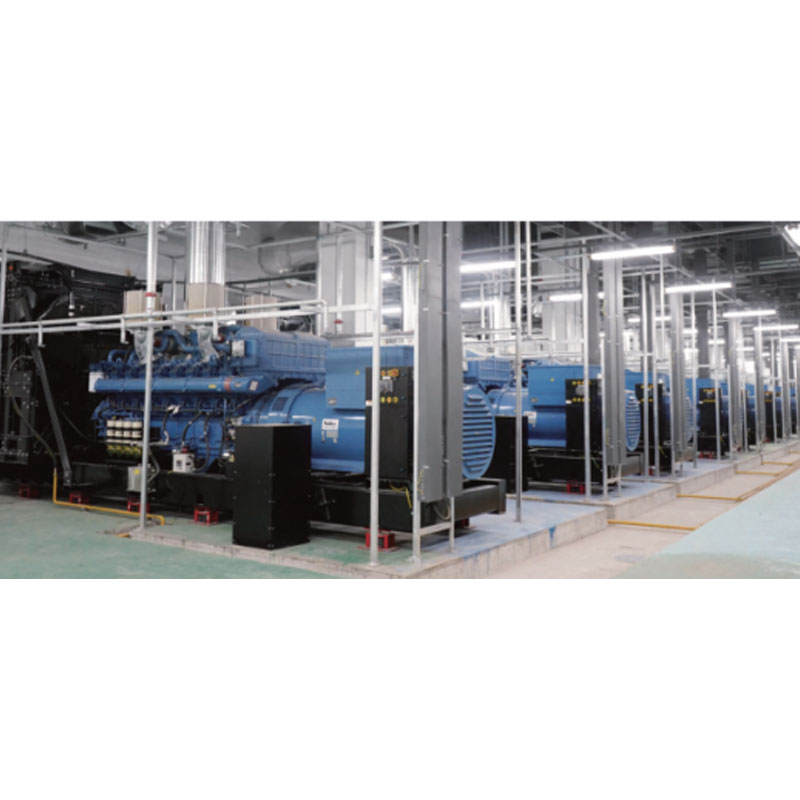
Foundation and vibration isolation. The generator set generates significant vibrations. Installation on a regular concrete floor without vibration isolators transfers these vibrations to the building structure, causing fatigue cracks and failure of pipeline connections. It is necessary to use specialized vibration supports selected for the weight of the unit and the shaft rotation speed. The foundation frame must be aligned with a laser level with an accuracy of 1-2 mm over a length of 5 meters. Frame misalignment leads to misalignment of the engine and generator shafts, which causes rapid wear of the bearings and couplings.
Exhaust system installation. This is one of the most critical areas. Exhaust gases have temperatures up to 600°C and contain aggressive chemical compounds. The use of low-quality expansion joints (flexible inserts) or improper fixation of pipes leads to ruptures and gas leaks into the room. In our practice, there was a case of carbon monoxide poisoning of personnel due to a microcrack in the weld of the exhaust pipe, which was not detected during a visual inspection. A mandatory requirement is the use of stainless steel bellows expansion joints and the organization of removal of condensate, which is formed during cooling of gases and contains sulfuric acid, which corrodes the muffler.
Electrical installation work. The cross-section of power cables must correspond to the design, taking into account voltage drop and thermal resistance to short-circuit currents. Particular attention is paid to tightening contact connections. Under-tightening leads to heating and burnout of the contact, over-tightening leads to deformation of the tires and destruction of the insulators. We require the use of torque wrenches and mandatory marking of all cables on both sides. Cable routes must be laid in compliance with bending radii and protected from mechanical damage.
Fuel supply system. For diesel stations, fuel purity is critical. The installation of fuel tanks must include a filtration and separation system for water and mechanical impurities. The return piping must be connected correctly to avoid air in the system. An error in the fuel recirculation circuit can cause hot fuel to return to the tank, overheating it and reducing its viscosity, which interferes with the operation of the high pressure fuel pump.
Common mistake:Ignoring the requirements for organizing supply and exhaust ventilation. The generator needs air not only for combustion, but also for cooling the radiator. The lack of air creates a vacuum in the room, the engine “suffocates”, power drops, and the temperature rises. The area of the ventilation grilles should be calculated based on the air flow of the engine and radiator fan, with a margin of 15-20%.
Recommendation for action:Hire an independent technical supervisor to accept hidden work (foundation, grounding, underground cable routes). Take photographs of all stages before backfilling or concreting. This is the only proof of compliance with the technology in the event of future disputes.
Commissioning and commissioning
Commissioning (Commissioning) is the final check of the entire system before transfer to the customer. It's not just “pressing the start button.” The commissioning complex includes checking secondary switching circuits, setting controller parameters, testing protection systems and synchronizing with the network. Without qualified adjusters, a modern digital station will not be able to work correctly. The controller must be programmed for specific conditions: settings for oil pressure, antifreeze temperature, voltage and frequency must comply with the engine manufacturer's recommendations.
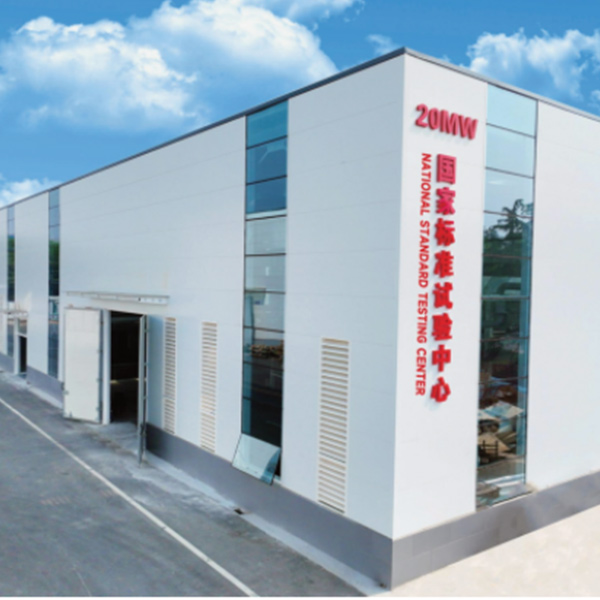
A mandatory step is to carry out load tests. The station must be loaded at 25%, 50%, 75% and 100% of rated power with a time delay at each stage. At the same time, all parameters are monitored: boost pressure, exhaust gas temperature in the cylinders, exhaust composition, frequency and voltage stability. We use bank loads (resistor blocks) to simulate real operation, since connecting directly to real production is risky. This is the only way to identify hidden defects, for example, uneven operation of the cylinders or overheating of a separate phase of the generator. It is important to note that responsible manufacturers, such as Yuke LLC, conduct similar comprehensive load tests of each piece of equipment at the factory before shipment, which significantly reduces risks at the commissioning stage.
Checking the ATS (automatic transfer transfer) system. This is the heart of the backup system. The switching logic is tested: loss of network → starting the generator → entering the mode → turning on the machine → restoring the network → waiting for stabilization → switching to the network → cooling → stop. The time of the entire cycle must fit within the standards (usually up to 15-30 seconds for a full cycle). The counter-connection blocking is also checked to ensure that the generator never operates in parallel with the network without special permission and equipment.
Submission of documentation and staff training. Based on the results of the commissioning work, as-built documentation is generated, including test reports, insulation and grounding resistance measurement protocols, equipment passports and settings logs. Training local staff is a critical element for success. The customer's engineers must be able not only to start the station, but also to recognize a pre-emergency situation, carry out maintenance of the first line and correctly fill out the logbook. We record all instructions in the form of video tutorials and checklists, adapted for a specific object.
Commissioning into commercial operation is carried out by signing the acceptance certificate. From this moment the warranty period begins. It is important to remember that the warranty is void if maintenance regulations are violated or non-original consumables are used. Therefore, the first year of operation should be closely monitored by the supplier.
Recommendation for action:Insist on conducting full tests under a bank load of 100% power for at least 2-4 hours before signing the act. This is the only way to ensure that the station is ready for real operation.
Operation, maintenance and modernization
The life cycle of a power plant does not end with startup. Regular maintenance (TO) is the key to ensuring that the station will work at the right time. The maintenance schedule is determined by engine hours or calendar period. Basic maintenance includes changing oil, oil, fuel and air filters, checking belt tension, antifreeze level and battery condition. Missing the oil change period leads to the formation of sludge in the engine and jamming of the liners.
In industrial operating conditions, special attention must be paid to fuel quality. Diesel fuel tends to age and become infected with microorganisms (“diesel fungus”), which clog filters and corrode tanks. We recommend installing fuel polishing systems and laboratory analysis every 6 months. For gas stations, regular analysis of engine oil for the content of wear metals is important, which makes it possible to predict the remaining life of the piston group without disassembling the engine.
Modernization and digitalization. Modern telemetry systems make it possible to transmit data about station operation to the cloud in real time. This makes it possible for predictive maintenance: the system itself will warn of a drop in pressure or rise in temperature even before an accident occurs. The implementation of such systems at old stations (retrofitting) is often economically justified, as it reduces the risk of downtime. In 2026, the presence of a remote monitoring system becomes the de facto standard for critical facilities.
We were faced with a situation where the lack of regular testing of the batteries led to the failure of the station to start when the network was disconnected. The batteries have lost capacity without the operator noticing. The introduction of an automatic battery condition monitoring system (SOC) made it possible to eliminate such cases. This is a simple example of how small investments in diagnostics can save you from major losses.
Planning for major repairs. The engine resource is not infinite. Knowing the operating time and operating conditions, you can accurately predict the time of the next overhaul. Planning this event in advance avoids sudden production stops. Ordering spare parts and preparing the team should begin 3-4 months before the planned date.
Recommendation for action:Sign a long-term service contract with an authorized partner, which includes not only replacement of consumables, but also annual thermographic diagnostics of electrical panels and oil analysis. This will move your expenses from the unexpected category to the planned category.
Conclusion: Investing in Energy Independence
Creationindustrial power station: design and installationwhich is carried out professionally, is a strategic investment in business stability. In conditions of instability of external networks and rising tariffs, in-house generation provides a competitive advantage: control over production costs and protection from force majeure. However, the path from an idea to a working facility requires competencies in dozens of areas: from geology to high-voltage electrical engineering.
Attempts to simplify the process, saving on the project or attracting unqualified installers, always lead to an increase in the cost of the object’s life cycle. Reliability, safety and efficiency are the result of a systematic approach, compliance with GOST standards and the use of equipment from trusted manufacturers. Our team, relying on the experience of partners like Yuke (Shandong) Electrical Technologies LLC, is ready to take on the full cycle of work: from energy audit and design to delivery, installation and service support of your future power plant. The principle of “reliability through responsibility” that underlies the work of such companies ensures that your enterprise receives a next-generation solution that combines traditional sources with innovations in the field of hybridization and digital monitoring.
Don't let energy supply issues slow down your production. Contact us today for a consultation and preliminary project cost estimate. We will help you choose the optimal solution that will provide your enterprise with light and heat for many years.
Industrial generator sets | Service | Design of energy facilities
-


-
-


WeChat

-
WeChat